Forward Head Posture in Children: Causes and Corrections
- Juliana Lucky

- 6 days ago
- 8 min read
Forward head posture in children has become one of the most common alignment issues I see in my practice. The pattern is distinctive: the head sits in front of the shoulders rather than directly above them, the chin juts forward, and the upper back rounds to compensate. Ten years ago, I saw this pattern mostly in teenagers. Today, I see it in children as young as 5 and 6.
The primary driver is screen time. Tablets, phones, and laptops pull the head forward and down for hours each day, and children's developing spines adapt to that position over time. The good news is that forward head posture in children is almost always correctable with the right combination of awareness, habit changes, and targeted exercises. Here is what parents need to know about forward head posture kids causes, what to look for, and how to address it.
What Is Forward Head Posture in Children?
Forward head posture (sometimes called tech neck or anterior head carriage) happens when the head shifts forward of the body's center of gravity. In a well-aligned posture, the ears line up directly over the shoulders when viewed from the side. In forward head posture, the ears are visibly in front of the shoulders, sometimes by 2 to 3 inches or more.
This matters because the human head weighs approximately 10 to 12 pounds. For every inch the head moves forward, the effective load on the neck and upper back muscles increases significantly. Research published in the Journal of Physical Therapy Science has documented the relationship between forward head position and increased strain on the cervical spine. In children, whose spines are still developing, sustained forward head posture can lead to chronic muscle tightness, headaches, neck pain, and changes in how the upper spine grows.
Forward head posture rarely appears in isolation. It is almost always part of a larger pattern that includes rounded shoulders, a flattened curve in the lower back, and a forward tilt of the upper body. Addressing one piece without the others is unlikely to produce lasting improvement.

What Causes Forward Head Posture in Kids?
The causes are mostly modern lifestyle habits. Understanding them helps parents make practical changes that support better alignment:
Screen Time and Device Use
This is the leading cause. When children look at tablets, phones, or laptops, they almost always tilt the head forward and down. The American Academy of Pediatrics has noted the increasing amount of time children spend on screens, and the physical effects on posture are well documented. A child who spends 2 to 3 hours daily looking down at a device is training their neck and upper back muscles to hold a forward position. Over weeks and months, the muscles at the back of the neck shorten, the muscles at the front of the neck weaken, and the forward position starts to feel normal. I discuss the broader effects in my post on screen time and posture in kids.
Poor Desk and Seating Setup
Children who sit at desks or tables that are too high (or chairs that are too low) naturally push their heads forward to see their work. When the screen or book is below eye level, the head drops forward. When the chair does not support the lower back, the entire spine rounds. Proper desk posture for kids starts with a setup where the screen is at eye level and the child's feet reach the floor.
Heavy Backpacks
A backpack that is too heavy or worn too low pulls the body backward, and the head shifts forward to compensate. This is a common contributor in school-age children who carry 15 to 20 percent of their body weight on their backs daily. Keeping the pack close to the body and using both straps helps reduce this effect.
Weak Postural Muscles
Children who spend most of their day sitting and very little time in active play develop weakness in the muscles that hold the head and shoulders in alignment. The deep neck flexors, the upper back extensors, and the scapular stabilizers all need regular activation through movement. Without it, the head gradually drifts forward because the muscles that should hold it back are too weak to do their job.

How to Spot Forward Head Posture in Your Child
The simplest test takes 10 seconds. Have your child stand naturally with their back against a wall. Their heels, buttocks, and upper back should touch the wall. Now look at the back of their head. If it touches the wall comfortably, their head alignment is good. If there is a gap between the head and the wall (and the child has to actively push the head back to make it touch), that indicates forward head posture.
Other signs to watch for:
The chin points forward rather than being level with the ground
The ears are visibly in front of the shoulders when viewed from the side
The upper back appears rounded, especially when sitting
The child frequently complains of neck stiffness, headaches, or upper back soreness
The child's natural resting position when sitting involves the head being far in front of the body
Taking a side-view photo of your child standing naturally (without telling them to stand up straight first) gives you a clear reference point. Take another photo every 4 to 6 weeks to track changes once you start exercises.
Exercises That Correct Forward Head Posture in Children
Tech neck children correction requires two things: strengthening the muscles that pull the head back into alignment and stretching the muscles that have become tight from the forward position. Here are the exercises I recommend most often:
Chin Tucks
Sit or stand tall. Pull the chin straight back (like making a double chin) without tilting the head up or down. Hold for 5 seconds, then release. This activates the deep neck flexors that support the cervical spine. Do 10 repetitions, 2 to 3 times daily. This is the single most effective exercise for forward head posture because it directly retrains the position of the head relative to the neck.
Wall Angels
Stand with the back against a wall, feet about 6 inches from the wall. Press the head, upper back, and arms against the wall. Slowly slide the arms up overhead (like making a snow angel) and back down, keeping everything in contact with the wall. This strengthens the upper back and rear shoulder muscles while opening the chest. Do 8 to 10 repetitions. If your child is also working on exercises for slouching, wall angels are an excellent addition to that routine.
Doorway Chest Stretch
Stand in a doorway with both forearms on the door frame at shoulder height. Step one foot forward through the doorway until a gentle stretch is felt across the front of the chest and shoulders. Hold for 20 to 30 seconds. This stretches the pectoral muscles that pull the shoulders (and head) forward when they are tight. Do 3 repetitions.
Prone Y Raise
Lie face down on the floor with arms extended overhead in a Y position, thumbs pointing toward the ceiling. Lift both arms off the floor by squeezing the upper back muscles. Hold for 3 seconds, then lower. This targets the lower trapezius and the muscles along the spine that extend the upper back and hold the head in alignment. Do 8 to 10 repetitions. Combine this with the posture exercises I recommend for home practice for best results.

Daily Habits That Prevent Tech Neck in Children
Exercises correct the pattern, but daily habits determine whether it comes back. These adjustments make a significant difference:
Raise the screen to eye level. Use a tablet stand, a stack of books, or a monitor riser. The top of the screen should be at or slightly below eye height.
Set a posture timer. Every 20 to 30 minutes of screen time, prompt the child to do 5 chin tucks. This takes less than 30 seconds and prevents the head from settling into the forward position.
Encourage movement breaks. A 2-minute movement break every 30 minutes of sitting is enough to reset the postural muscles. Standing, stretching, or walking to the kitchen and back all count.
Check backpack weight. The pack should weigh no more than 10 to 15 percent of the child's body weight and should sit snugly against the upper back, not hanging low.
According to KidsHealth, good posture habits formed in childhood carry into adulthood. The earlier you address forward head posture, the easier it is to correct because the muscles and spine are still adapting. Children's bodies respond faster to posture correction than adult bodies do, which means the effort you put in now pays off quickly.
You May Also Like
Test Your Knowledge: Forward Head Posture in Children
See how much you picked up from this post. Check your answers below each question.
1. What is forward head posture?
a) The head tilts to one side
b) The head sits in front of the shoulders rather than directly above them
c) The head tilts backward
d) The neck is perfectly straight
Answer: b) The head sits in front of the shoulders rather than directly above them. In proper alignment, the ears line up directly over the shoulders when viewed from the side.
2. What is the leading cause of forward head posture in children today?
a) Sleeping on a bad pillow
b) Screen time and device use that pulls the head forward and down
c) Eating too much sugar
d) Wearing the wrong shoes
Answer: b) Screen time and device use that pulls the head forward and down. Hours of looking at tablets, phones, and laptops train the neck muscles to hold a forward position over time.
3. How can you test for forward head posture at home?
a) Measure the child's height
b) Have the child stand against a wall and check if the back of the head touches comfortably
c) Ask the child to touch their toes
d) Check their shoe wear pattern
Answer: b) Have the child stand against a wall and check if the back of the head touches comfortably. If there is a gap and the child must push the head back to touch the wall, it indicates forward head posture.
4. What is the single most effective exercise for forward head posture?
a) Jumping jacks
b) Chin tucks, pulling the chin straight back to activate the deep neck flexors
c) Sit-ups
d) Toe touches
Answer: b) Chin tucks, pulling the chin straight back to activate the deep neck flexors. This exercise directly retrains the position of the head relative to the neck and strengthens the muscles that support the cervical spine.
5. How often should movement breaks happen during screen time?
a) Once per hour
b) Every 20 to 30 minutes of sitting
c) Only when the child complains of pain
d) Once per day
Answer: b) Every 20 to 30 minutes of sitting. A 2-minute movement break every 30 minutes resets the postural muscles and prevents the head from settling into the forward position.
Get a Personal Assessment for Your Child
Every child's posture pattern is different, and the right correction approach depends on the specific combination of tightness and weakness present. My personal diagnostic provides a detailed assessment of your child's alignment and a targeted exercise plan based on exactly what their body needs.
Catching forward head posture early and addressing it with the right exercises gives children the best chance of developing alignment habits that last into adulthood.


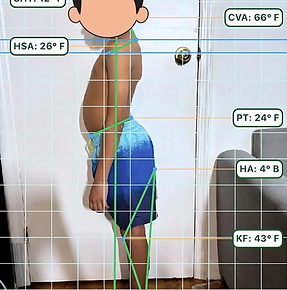


Forward head posture in children is becoming increasingly common due to screen time and poor sitting habits. Early awareness and corrective exercises can make a real difference in long-term spinal health. Tools like https://calcly.world/ can help track posture improvements and encourage consistency in daily routines. Schools and parents should work together to promote healthy habits, stretching, and ergonomic study setups for kids. Early correction helps prevent long-term posture issues effectively.