Mindful Movement for Anxious Children
- Juliana Lucky

- 19 hours ago
- 7 min read
Anxiety in children does not always look the way adults expect. Sometimes it is stomach aches before school. Sometimes it is a child who cannot sit still, or one who freezes during new situations. For many kids, anxiety lives in the body as much as it lives in the mind. Tight shoulders, shallow breathing, clenched fists, or a rigid posture are all physical expressions of a nervous system on high alert.
Mindful movement for anxious kids works because it meets the anxiety where it shows up: in the body. Instead of asking a child to talk about their feelings (which can feel impossible when they are overwhelmed), mindful movement gives them something physical to do that naturally calms the nervous system. In my experience working with children and as a mom, I have seen movement shift a child's state in minutes when words could not reach them. Here is what the research says, which exercises work best, and how to build a calming movement practice your child will actually use.
Why Movement Helps Anxious Children
Anxiety activates the sympathetic nervous system, which is the body's fight-or-flight response. Heart rate increases, muscles tighten, breathing becomes shallow, and the brain shifts into a scanning mode that looks for threats everywhere. For children, this response can be triggered by situations that adults consider mild: a new classroom, a loud noise, a change in routine, or even anticipating something unfamiliar.
Movement for anxious children works through several pathways. A meta-analysis published in Frontiers in Psychology found that physical activity significantly reduced anxiety symptoms in children and adolescents. The researchers noted that movement activates the parasympathetic nervous system (the body's rest-and-digest response), releases tension stored in the muscles, and redirects the brain's attention from worry to the physical sensations of the present moment.
What makes mindful movement different from regular exercise is the intentionality. Running around the playground burns energy, and that can help. But mindful movement asks the child to pay attention to what their body is doing, where they feel tension, how their breathing changes, and what happens when they slow down. This combination of physical activity and focused awareness creates a deeper calming effect than exercise alone.
The American Academy of Pediatrics recognizes that anxiety disorders are among the most common mental health conditions in children, affecting approximately 7 percent of kids ages 3 to 17. While severe anxiety warrants professional support, mild to moderate anxiety responds well to lifestyle strategies, and movement is one of the most accessible tools available to every family.
Calming Exercises Kids with Anxiety Can Do Anywhere
The best calming exercises for kids anxiety are ones that work in the moment, wherever the child happens to be. These exercises do not require equipment, a special space, or even changing clothes. They can happen in a bedroom, a car, a school hallway, or a park bench.
1. Belly Breathing with Movement
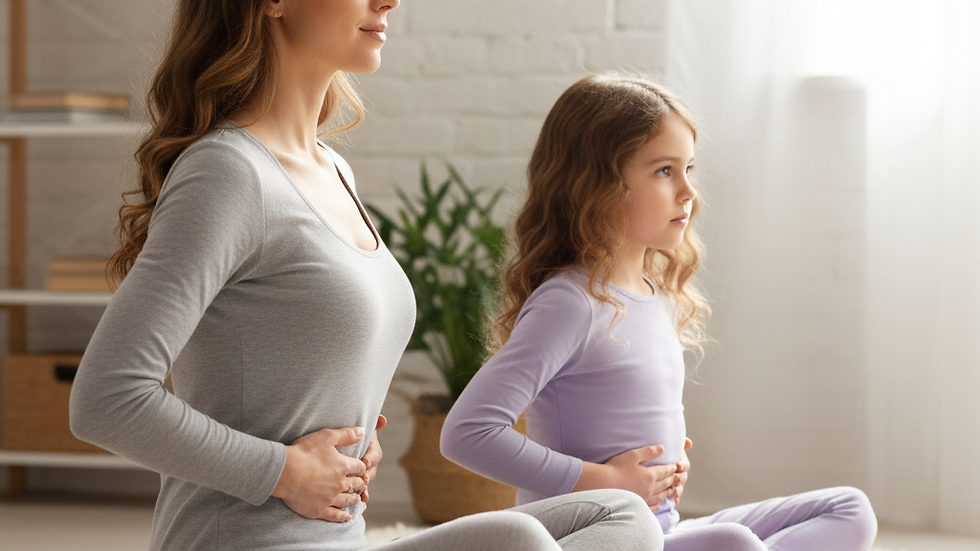
Sit or stand with hands on the belly. Breathe in slowly through the nose for a count of 4, feeling the belly expand under the hands. Hold for 2 counts. Breathe out through the mouth for a count of 6, feeling the belly draw inward. While breathing out, slowly raise the arms overhead. While breathing in, slowly lower them. Repeat 5 times. The combination of deep breathing and slow arm movement activates the parasympathetic nervous system more effectively than breathing alone.
2. Ragdoll Shake
Stand with feet hip-width apart. Tighten every muscle in the body for 5 seconds: clench fists, squeeze shoulders up to ears, tighten legs and belly. Then release everything at once and let the body go completely limp, like a ragdoll. Shake the arms, hands, legs, and whole body loosely for 10 seconds. Repeat 3 times. This exercise works because anxiety causes muscle tension that children often do not notice. The tighten-then-release pattern helps them feel the difference between a tense body and a relaxed one.
3. Slow Walking Meditation
Walk in a straight line as slowly as possible. Pay attention to every part of the step: lifting the foot, moving it forward, placing the heel down, rolling onto the toes. Feel the ground beneath each foot. Walk 10 slow steps forward, then turn and walk 10 slow steps back. This exercise anchors the child in the present moment by giving the brain something specific and physical to focus on. It is especially effective for children who tend to spiral into worry about future events.

4. Tree Pose Hold
Stand on one foot and place the other foot on the inner calf or thigh (never on the knee). Bring hands to heart center or extend them overhead like branches. Hold for 20 to 30 seconds, then switch sides. Balancing requires full concentration, which makes it nearly impossible for the brain to maintain anxious thoughts at the same time. This is one of the yoga poses that build better posture while also serving as a powerful anxiety-calming tool.
5. Wall Push Reset
Stand facing a wall, arms length away. Place both hands flat on the wall at shoulder height. Push against the wall as hard as possible for 10 seconds while breathing deeply. Then release and step back. Repeat 3 times. This exercise provides heavy proprioceptive input, which tells the nervous system exactly where the body is in space. For anxious children, proprioceptive input is deeply organizing and calming. It gives the body a clear physical task that signals safety. Developing this kind of body awareness is a skill that serves children well beyond moments of anxiety.
6. Cat-Cow Breathing
On hands and knees, inhale and drop the belly toward the floor while lifting the head and tailbone (cow pose). Exhale and round the spine up toward the ceiling, tucking the chin and tailbone (cat pose). Move slowly between the two positions, matching each movement to a breath. Do 8 to 10 rounds. This rhythmic spinal movement combined with controlled breathing is one of the most effective calming exercises kids anxiety responds to. The gentle motion releases tension in the back and neck, which is where many anxious children hold stress.

Building a Mindful Movement Routine for an Anxious Child
A one-time exercise helps in the moment, but a consistent routine builds the nervous system's capacity to self-regulate over time. Here is how I recommend building a mindful movement practice:
Start with 5 minutes daily. Pick 2 to 3 exercises from the list above and practice them at the same time each day. Before bed and after school are two windows that work well for most families. Consistency at a specific time helps the routine become automatic.
Practice when calm, not just when anxious. If a child only does these exercises during anxious moments, they may associate the exercises with anxiety itself. Practicing when calm builds the skill so the body knows how to access it during stressful times.
Let the child choose their favorites. Children who select which exercises to include are more likely to do them independently. Offer all six options and let them pick three that feel best.
Do it together. Mindful movement is more effective when done alongside a calm, regulated adult. Your nervous system helps regulate theirs. This is co-regulation, and it is one of the most powerful tools a parent has. Incorporating it into your family exercise routine makes it feel natural rather than clinical.
According to KidsHealth, children who have regular stress-management tools are better equipped to handle new challenges and transitions. Mindful movement is one of those tools, and unlike many interventions, it costs nothing, has no side effects, and can be practiced anywhere.
My older daughter went through a phase of bedtime anxiety around age 7. Talking about it made her more anxious. What worked was 5 minutes of cat-cow breathing and slow belly breathing before lights out. Within a week, she was asking for "our breathing time" on her own. The movement gave her something to do with the anxiety instead of just sitting with it. That shift, from feeling helpless to having a tool, made all the difference. Pairing these exercises with a consistent morning movement routine also helps anxious kids start the day with a calmer baseline.
You May Also Like
Test Your Knowledge: Mindful Movement for Anxious Kids
See how much you picked up from this post. Check your answers below each question.
1. Why does mindful movement work better than regular exercise for anxiety?
a) It burns more calories
b) It combines physical activity with focused awareness of body sensations and breathing
c) It is more tiring
d) It requires expensive equipment
Answer: b) It combines physical activity with focused awareness of body sensations and breathing. This combination creates a deeper calming effect than exercise alone because it redirects the brain from worry to present-moment awareness.
2. What does the Ragdoll Shake exercise teach children?
a) How to dance
b) The difference between a tense body and a relaxed one
c) How to stand completely still
d) How to hold their breath
Answer: b) The difference between a tense body and a relaxed one. The tighten-then-release pattern helps children notice muscle tension they were not aware of and feel what relaxation actually feels like in their body.
3. Why is balance work (like Tree Pose) effective for calming anxiety?
a) It makes the child tired enough to sleep
b) Balancing requires full concentration, making it hard for the brain to maintain anxious thoughts
c) It stretches the legs
d) It only works for adults
Answer: b) Balancing requires full concentration, making it hard for the brain to maintain anxious thoughts. The brain cannot fully focus on balance and worry at the same time, which provides a natural break from the anxiety cycle.
4. When is the best time to practice mindful movement exercises?
a) Only during anxious moments
b) Both during calm times and anxious moments, with daily practice at a consistent time
c) Only at school
d) Once a month
Answer: b) Both during calm times and anxious moments, with daily practice at a consistent time. Practicing when calm builds the skill so the body knows how to access it during stressful times.
5. What is co-regulation and why does it matter for anxious children?
a) A type of medication
b) When a calm adult's nervous system helps regulate a child's nervous system through shared activity
c) When two children exercise together
d) A breathing technique
Answer: b) When a calm adult's nervous system helps regulate a child's nervous system through shared activity. Doing mindful movement alongside your child is more effective because your regulated state helps their nervous system settle.
Movement and Mindfulness in One Place
Mindful movement is one of the most effective tools for helping anxious children feel safe in their bodies. My Yoga and Mindfulness for Kids book gives families a collection of poses, breathing exercises, and calming routines designed specifically for children.
When children have a movement practice they can rely on, worry loses some of its power, and confidence takes its place.





Comments