Exercises for Forward Head Posture in Kids
- Juliana Lucky

- Jun 4
- 7 min read
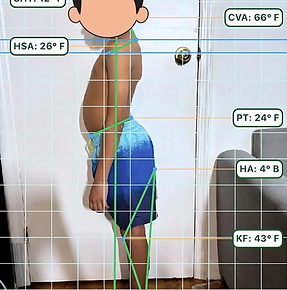
Forward head posture is one of the most common alignment patterns I see in children today. The head drifts forward of the shoulders, the chin juts out, and the upper back rounds to compensate. It happens gradually, often from hours spent looking down at tablets, phones, or books. Most parents don't notice it until the pattern is well established.
The good news is that forward head posture in children responds well to targeted exercises. Young bodies are adaptable, and the muscles that hold the head in proper alignment can be retrained with consistent practice. In this post, I will walk you through the exercises forward head posture kids benefit from most, explain why each one works, and give you a simple routine you can start this week.
What Causes Forward Head Posture in Children?
The primary driver is screen time. When children look down at a device, the head tilts forward and the neck muscles stretch to support the weight. A child's head weighs about 8 to 10 pounds, and for every inch it moves forward, the effective load on the neck increases by roughly 10 pounds. A study published in Surgical Technology International confirmed this relationship between head position and cervical spine stress. Over weeks and months, the muscles at the front of the neck shorten, the muscles at the back of the neck weaken, and the position becomes the child's default.
Screen time is not the only cause. Heavy backpacks, slouching at a desk, and reading in bed with the head propped forward all contribute. The American Academy of Pediatrics has raised concerns about the physical effects of prolonged screen use in children, and forward head posture is one of the most visible consequences. If you have noticed signs of poor posture in your child, forward head position is often part of that picture.

How to Tell If Your Child Has Forward Head Posture
A simple way to check is the wall test. Have your child stand with their back against a wall, heels touching the baseboard. Their shoulder blades and buttocks should touch the wall naturally. Look at the back of their head. If it doesn't touch the wall without them tilting it back, they likely have some degree of forward head posture.
Other signs to watch for:
The chin appears to stick out when viewed from the side.
The upper back looks rounded, especially when the child is relaxed.
The child complains of neck stiffness or headaches after screen time.
The ears sit visibly in front of the shoulders when viewed from the side.
Forward head posture exercises children can do at home target two things: strengthening the deep neck flexors and upper back muscles that pull the head back into alignment, and stretching the tight chest and front-of-neck muscles that pull it forward. Both are necessary for lasting change.
6 Exercises for Forward Head Posture in Kids
These exercises are safe for children ages 5 and up. Each one takes less than a minute, and the full routine can be done in under 10 minutes. I recommend practicing three to four times per week for the best results.
1. Chin Tucks
This is the most important exercise for forward head posture and the one I start every child with. The chin tuck strengthens the deep cervical flexors, the small muscles at the front of the neck that hold the head in its proper position over the spine.
How to do it: Have your child stand or sit tall. Ask them to gently pull their chin straight back, as if making a double chin. The motion is small and controlled. They should feel a gentle stretch at the base of the skull and a light engagement in the front of the neck. Hold for 5 seconds, release, and repeat 10 times. I tell kids to imagine a string pulling the back of their head toward the ceiling.
2. Wall Angels
Wall angels strengthen the muscles between the shoulder blades and open up the chest. Stand with the back against a wall, feet about 6 inches away from the baseboard. Press the lower back, shoulder blades, and head against the wall. Raise both arms to a goal-post position with elbows bent at 90 degrees. Slowly slide the arms up overhead, keeping contact with the wall, then slide back down. Do 8 to 10 repetitions. If the child cannot keep their head against the wall, that tells you how much forward head shift they have.
3. Doorway Chest Stretch
Tight chest muscles pull the shoulders forward, which drags the head with them. To stretch, have your child stand in a doorway with one arm on each side of the frame, elbows at shoulder height and bent at 90 degrees. Step one foot forward gently until they feel a stretch across the front of the chest. Hold for 20 to 30 seconds and repeat twice. This stretch helps undo the tightness that desk posture creates over the school day.

4. Prone Y Raises
This exercise targets the lower trapezius and rhomboids, the muscles that pull the shoulder blades down and back. Have your child lie face down on the floor with arms extended overhead in a Y shape, thumbs pointing toward the ceiling. Lift both arms a few inches off the ground, squeezing the shoulder blades together. Hold for 3 seconds and lower. Repeat 10 times. Start without weights. If your child is 8 or older and finds it easy, they can hold small water bottles for added resistance.
5. Cat-Cow Stretch
Cat-cow mobilizes the entire spine and helps children develop awareness of how their head position connects to their back. Start on hands and knees with wrists under shoulders and knees under hips. For the cow position, drop the belly toward the floor, lift the chest, and look slightly upward. For the cat position, round the back toward the ceiling, tuck the chin, and look toward the belly button. Move slowly between the two positions for 8 to 10 repetitions. Encourage your child to notice how the head position changes with each movement.
6. Shoulder Blade Squeezes
This one can be done anywhere, anytime. Have your child sit or stand tall and squeeze the shoulder blades together, as if trying to hold a pencil between them. Hold for 5 seconds, then release. Repeat 15 times. This exercise counters the forward rounding that comes from rounded shoulders and pulls the whole upper body into better alignment. I have my own girls do these during homework breaks.
Building a Weekly Routine for Neck Posture Exercises Kids Can Follow
Consistency matters more than intensity with these exercises. Here is the schedule I recommend for most families:
Monday, Wednesday, Friday, Sunday: Full routine (all 6 exercises, about 8 to 10 minutes).
Every day: Chin tucks and shoulder blade squeezes during screen breaks (1 minute total).
After homework: Doorway chest stretch and 5 wall angels to reset posture.
Most children start noticing a difference within 3 to 4 weeks. Their head sits more naturally over their shoulders, the upper back rounding decreases, and neck discomfort fades. The younger the child, the faster the results tend to appear, because their muscle memory hasn't been locked in as long. Building core strength alongside these exercises will support the improvements even further, since the spine needs a strong base.

Preventing Forward Head Posture from Returning
Exercises address the muscular imbalances, but without changing the habits that created the problem, the posture will drift back. Here are the most effective prevention strategies I recommend to families:
Raise screens to eye level. Whether it's a tablet, laptop, or phone, keeping the screen at eye height eliminates the need to look down. A simple tablet stand or stack of books works.
Set a 20-minute screen timer. Every 20 minutes, the child takes a 30-second break to do chin tucks and look around the room. This is similar to the 20-20-20 rule eye doctors recommend for screen use.
Check the school setup. If your child uses a desk or table that is too low, they will hunch forward. The desk surface should be at elbow height when the child sits upright.
Lighten the backpack. A heavy backpack pulls the body forward and reinforces the head-forward pattern. Keep the weight below 10 to 15 percent of the child's body weight.
According to KidsHealth, good posture helps the body function efficiently and can prevent aches and pains that come from muscles working harder than they need to. Teaching your child these habits alongside the exercises creates a foundation that lasts.
You May Also Like
Test Your Knowledge: Forward Head Posture in Kids
See how much you picked up from this post. Check your answers below each question.
1. What is the wall test for forward head posture?
a) Standing on one foot against a wall
b) Standing with back against a wall and checking if the head touches naturally
c) Pressing the forehead against a wall for 30 seconds
d) Walking along a wall with eyes closed
Answer: b) Standing with back against a wall and checking if the head touches naturally. If the head does not touch the wall without tilting it back, there is likely some degree of forward head posture.
2. How much extra load does each inch of forward head position add to the neck?
a) About 2 pounds
b) About 5 pounds
c) About 10 pounds
d) About 20 pounds
Answer: c) About 10 pounds. A child's head weighs 8 to 10 pounds, and the effective load on the neck roughly doubles with just one inch of forward shift.
3. Which exercise is the most important starting point for correcting forward head posture?
a) Jumping jacks
b) Chin tucks
c) Push-ups
d) Toe touches
Answer: b) Chin tucks. Chin tucks strengthen the deep cervical flexors, which are the muscles most responsible for holding the head in proper alignment over the spine.
4. How often should kids do the full forward head posture exercise routine?
a) Once a month
b) Every day for an hour
c) Three to four times per week
d) Only when symptoms appear
Answer: c) Three to four times per week. Consistency beats intensity with postural exercises. The full routine takes under 10 minutes and produces noticeable results within 3 to 4 weeks.
5. What is the best screen height to prevent forward head posture?
a) Below the lap
b) At chest height
c) At eye level
d) Above the head
Answer: c) At eye level. Raising screens to eye level eliminates the need to look down, which is the primary cause of forward head posture during screen use.
A Full Program Built Around These Exercises
These exercises are a strong starting point for correcting forward head posture at home. My Posture and Feet course includes video-guided routines that address forward head posture alongside the shoulder, back, and core work that supports lasting alignment changes.
When you combine targeted neck exercises with a full-body posture program, the results come faster and stick longer.




Comments