Exercises to Help Kids Stand Up Straighter
- Juliana Lucky

- 8 hours ago
- 7 min read
Telling a child to "stand up straight" does not work. I say this as both a posture specialist and a mom who tried it. The reminder might produce a momentary adjustment, but within 30 seconds the slouch returns. That is because poor posture in children is rarely a habit problem. It is a strength and awareness problem. The muscles that hold the body upright are either too weak, too tight, or not activating in the right pattern.
The good news is that exercises help kids stand straight when they target the right muscle groups. Children's bodies respond quickly to targeted exercise because they are still growing and adapting. A few minutes of the right movements each day can produce visible changes in posture within weeks. Here are the kids stand up straight exercises I recommend most, why they work, and how to make them part of your child's routine.
Why Kids Slouch and Why Reminders Do Not Fix It
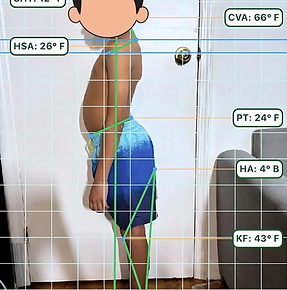
Good posture requires a coordinated effort from multiple muscle groups: the deep core stabilizers that support the spine, the upper back muscles that hold the shoulder blades in place, the hip flexors and glutes that position the pelvis, and the neck muscles that keep the head aligned over the shoulders. When any of these muscle groups is weak or tight, the body compensates by shifting into a position that requires less effort. That position is usually a slouch.
A study published in the Journal of Physical Therapy Science found that children who spent more than 3 hours daily in sedentary positions showed significantly weaker postural muscles compared to more active children. The researchers concluded that targeted strengthening exercises were more effective than postural reminders or braces at improving standing alignment.
Modern children sit more than any previous generation. School desks, car seats, tablets, and homework all contribute to a flexed, forward-leaning position for hours each day. The muscles on the front of the body shorten, the muscles on the back weaken, and the result is the slouched posture that parents notice. I explain the full picture in my post on signs of poor posture in children. Understanding the cause helps parents see that posture correction exercises for children work because they address the root issue, not the symptom.

7 Posture Correction Exercises Children Can Do at Home
These exercises target the muscle groups responsible for upright posture. They require no equipment and take about 10 minutes to complete. I recommend doing them 4 to 5 times per week for the best results.
1. Wall Angels
Stand with the back, head, and buttocks flat against a wall. Extend both arms out to the sides at shoulder height with elbows bent at 90 degrees (like a cactus shape). Slowly slide the arms up the wall overhead, keeping the back and arms in contact with the wall the entire time. Slide back down. Do 10 repetitions. Wall Angels strengthen the upper back muscles (rhomboids and lower trapezius) while stretching the tight chest muscles that pull the shoulders forward. This is one of the most effective exercises for rounded shoulders in kids.
2. Superman Hold
Lie face down on the floor with arms extended overhead. Lift the arms, chest, and legs off the ground simultaneously, holding the body in a slight arch. Hold for 5 seconds, then lower everything down. Rest for 2 seconds and repeat 8 times. This exercise strengthens the entire posterior chain: the muscles along the back of the body from the neck to the heels. These are the muscles that keep the spine extended and prevent the forward-leaning posture children develop from sitting.
3. Bird Dog
Start on hands and knees with a flat back. Extend the right arm forward and the left leg backward at the same time, forming a straight line from fingertip to toe. Hold for 5 seconds. Return to the starting position and switch to the left arm and right leg. Do 8 repetitions per side. Bird Dog trains the deep core muscles that stabilize the spine during movement. It also teaches the body to maintain a neutral spine while the limbs are moving, which is exactly what good standing posture requires.

4. Chin Tucks
Sit or stand tall. Without tilting the head up or down, gently draw the chin straight back, as if making a double chin. Hold for 5 seconds, then release. Do 10 repetitions. Chin Tucks strengthen the deep neck flexor muscles that hold the head in alignment over the shoulders. Forward head posture (the head jutting out in front of the body) is one of the most common postural issues in children, and this simple exercise directly corrects it.
5. Bridge Hold
Lie on the back with knees bent and feet flat on the floor, hip-width apart. Press through the heels and lift the hips toward the ceiling until the body forms a straight line from shoulders to knees. Squeeze the glutes at the top and hold for 10 seconds. Lower slowly. Do 8 repetitions. Bridges strengthen the glutes and hamstrings, which control the position of the pelvis. A weak posterior chain allows the pelvis to tilt forward, which creates an exaggerated curve in the lower back and pushes the belly forward. Strong glutes correct this pattern.
6. Doorway Chest Stretch
Stand in a doorway with both arms raised to shoulder height, elbows bent at 90 degrees, forearms resting on the door frame. Step one foot forward through the doorway until a gentle stretch is felt across the chest and front of the shoulders. Hold for 20 seconds. Step back and repeat 3 times. This stretch opens the chest muscles (pectorals) that tighten from hours of sitting, reading, and screen use. Tight chest muscles are one of the primary drivers of rounded shoulders, and releasing them allows the upper back muscles to pull the shoulders into better alignment.
7. Tightrope Toe Gaze
Walk in a straight line, placing one foot directly in front of the other like walking a tightrope. Keep the eyes focused forward and the crown of the head reaching toward the ceiling. Walk 15 steps forward, then turn and walk 15 steps back. Do 3 rounds. This exercise from my program trains balance, spinal alignment, and body awareness all at once. The concentration required to balance forces the body into an upright position naturally. Children who practice this regularly start carrying that upright posture into their normal walking pattern.

How to Build a Daily Posture Exercise Habit
The exercises above work, but only if your child does them consistently. Here is how to make that happen:
Pick 3 to 4 exercises to start. Doing all 7 every day is not necessary. Rotate through them, doing a different set of 3 to 4 each session. The full set takes under 10 minutes.
Attach it to an existing routine. After breakfast, before homework, or right before bed. Linking exercises to something that already happens makes the habit stick. My post on exercises for kids who slouch has more ideas for fitting posture work into daily life.
Make it visible. A simple chart on the refrigerator with the exercises listed (and a check mark for each day completed) gives kids a sense of accomplishment.
Do it together. My younger daughter does these exercises with me every evening. She thinks we are doing a "workout" together. The posture benefits are a side effect she does not think about.
According to KidsHealth, posture habits established during childhood carry into adulthood. The exercises that build postural strength now create the foundation for how your child will carry themselves for the rest of their life. That makes the 10 minutes per day one of the highest-return investments a parent can make in their child's physical development.
Most families see noticeable improvement within 3 to 4 weeks of consistent practice. The child's standing posture looks more upright, their shoulders sit farther back, and they complain less about back or neck discomfort after school. Those changes tend to be self-reinforcing: once a child feels the difference between slouching and standing tall, they naturally start choosing the upright position more often.
You May Also Like
Test Your Knowledge: Helping Kids Stand Straighter
See how much you picked up from this post. Check your answers below each question.
1. Why don't verbal reminders to "stand up straight" work long-term?
a) Kids are being defiant
b) Poor posture is usually a strength and awareness problem, not a habit problem
c) They work perfectly
d) Children cannot hear the reminder
Answer: b) Poor posture is usually a strength and awareness problem, not a habit problem. The muscles that hold the body upright are either too weak, too tight, or not activating correctly, so reminders only produce a momentary adjustment.
2. What do Wall Angels primarily strengthen?
a) The legs and ankles
b) The upper back muscles while stretching tight chest muscles
c) Only the neck
d) The wrists
Answer: b) The upper back muscles while stretching tight chest muscles. Wall Angels target the rhomboids and lower trapezius that hold shoulder blades in place, while opening the chest muscles that pull shoulders forward.
3. What postural problem do Chin Tucks correct?
a) Flat feet
b) Forward head posture, where the head juts out in front of the body
c) Knock knees
d) Rounded lower back
Answer: b) Forward head posture, where the head juts out in front of the body. Chin Tucks strengthen the deep neck flexor muscles that hold the head in alignment over the shoulders.
4. How often should kids do posture exercises to see results?
a) Once a month
b) 4 to 5 times per week, about 10 minutes per session
c) Once a year
d) 2 hours daily
Answer: b) 4 to 5 times per week, about 10 minutes per session. Most families see noticeable improvement within 3 to 4 weeks of consistent practice at this frequency.
5. Why are Bridges important for standing posture?
a) They stretch the chest
b) They strengthen the glutes and hamstrings, which control pelvic position
c) They strengthen the fingers
d) They only work the neck muscles
Answer: b) They strengthen the glutes and hamstrings, which control pelvic position. Weak glutes allow the pelvis to tilt forward, creating an exaggerated lower back curve. Strong glutes correct this pattern and support upright standing.
A Full Program Built Around These Exercises
These exercises are a strong starting point. For a complete, video-guided program that builds posture strength progressively and addresses your child's specific alignment patterns, my Posture and Feet course walks families through every step with clear demonstrations and a structured schedule.
Strong posture is something children can build. With the right exercises and a few minutes of daily practice, standing tall becomes the position their body naturally chooses.







Comments