Tight Hamstrings in Children: Why It Happens and What Helps
- Juliana Lucky

- 6 days ago
- 7 min read
Tight hamstrings in children are surprisingly common, and they show up in ways most parents don't expect. A child who can't touch their toes, who sits with a rounded back, or who complains of leg pain after running may all be dealing with the same underlying issue: hamstrings that are too short or too stiff for their current stage of growth.
I see this pattern regularly in my work with children's posture and alignment. Tight hamstrings affect how a child sits, stands, bends, and moves. They can contribute to lower back pain, poor sitting posture, and reduced performance in sports and physical activities. The encouraging part is that hamstring flexibility children develop through simple, consistent stretching tends to improve within a few weeks. Here is what I have learned about why it happens and what actually helps.
What Are the Hamstrings and Why Do They Get Tight in Kids?
The hamstrings are a group of three muscles that run along the back of the thigh, from the pelvis to just below the knee. They control bending the knee and extending the hip, and they play a major role in walking, running, jumping, and sitting posture. When these muscles are short or stiff, they pull on the pelvis and limit the range of motion in both the hips and the knees.
In children, there are several common reasons for tight hamstrings kids causes parents to worry about:
Growth spurts. During rapid growth, the bones can lengthen faster than the muscles and tendons can stretch. This is one of the most common causes of hamstring tightness in children ages 8 to 14. The American Academy of Pediatrics notes that growing pains and muscle tightness often coincide with growth spurts. I have written more about this in my post on growing pains in kids' legs.
Prolonged sitting. Children who sit for long periods at school and then sit again for homework, meals, and screen time spend most of their day with the hamstrings in a shortened position. Over time, the muscles adapt to that shortened length.
Low activity levels. Children who do not run, climb, or play actively on a regular basis tend to have tighter hamstrings because the muscles are not being moved through their full range of motion.
W-sitting habit. Children who frequently sit in a W position can develop tightness in several muscle groups, including the hamstrings and hip rotators.

How Tight Hamstrings in Children Affect Posture
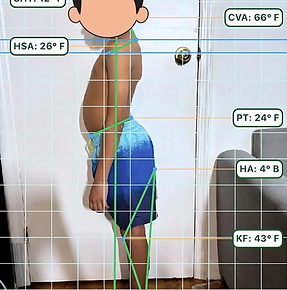
The hamstrings attach to the bottom of the pelvis. When they are tight, they pull the pelvis into a posterior tilt (tucking it under). This flattens the natural curve of the lower back and forces the spine into a rounded position. The result is the classic slumped sitting posture where the child's lower back is rounded and the shoulders fall forward.
A study in the Journal of Physical Therapy Science found a significant correlation between hamstring tightness and poor sitting posture in school-age children. Children with tighter hamstrings showed more lumbar flexion (rounding of the lower back) during seated tasks. This makes sense: if the hamstrings won't allow the pelvis to tilt forward enough for an upright sitting position, the child has no choice but to round their spine to compensate.
Beyond sitting posture, tight hamstrings can also contribute to lower back pain in children. When the pelvis is chronically pulled into a posterior tilt, the lower back muscles have to work harder to maintain any upright position. Over time, this can lead to fatigue and discomfort, especially after physical activity.
How to Test Your Child's Hamstring Flexibility
There are two simple tests you can do at home:
The Toe Touch Test
Have your child stand with feet together and bend forward to reach their toes, keeping the knees straight. A child with normal hamstring flexibility should be able to reach their toes or come within an inch or two. If they can only reach their shins or knees, the hamstrings are likely tight. Keep in mind that this test also involves back flexibility, so it is not a pure hamstring measurement.
The Straight Leg Raise Test
Have your child lie on their back on the floor. Lift one leg straight up while the other stays flat on the ground. A normal range for children is about 70 to 80 degrees from the floor. If the leg stops well before that angle, or if the child feels a strong pull behind the knee or thigh, the hamstrings on that side are tight. Test both legs, since it is common for one side to be tighter than the other.

Stretches and Exercises That Help Hamstring Flexibility in Children
Consistency matters more than intensity with hamstring stretching. Pushing too hard or bouncing into a stretch can actually make the muscles tighter as a protective response. Gentle, sustained stretches done regularly produce the best results. Here are the stretches I recommend most:
Seated Forward Fold
Sit on the floor with legs extended straight in front. Reach forward toward the toes with a flat back, hinging at the hips rather than rounding the spine. Hold for 20 to 30 seconds and repeat 3 times. The goal is to feel a gentle stretch along the back of the thighs, not pain.
Supine Hamstring Stretch
Lie on the back and lift one leg straight up. Hold the back of the thigh (not the knee) with both hands and gently pull the leg toward the chest. Keep the other leg flat on the floor. Hold for 20 to 30 seconds on each side. This is the gentlest hamstring stretch and works well for children who find other stretches uncomfortable.
Standing Hamstring Stretch
Place one heel on a low step or stool. Keep the leg straight and hinge forward from the hips until a stretch is felt in the back of the thigh. Hold for 20 to 30 seconds and switch legs. This stretch can be done anywhere and is easy to add to a daily routine.
Dynamic Leg Swings
Stand next to a wall for balance. Swing one leg forward and back in a controlled motion, gradually increasing the range with each swing. Do 10 to 15 swings per leg. Dynamic stretching like this is especially good before physical activity because it warms up the muscles while improving range of motion. For more detailed stretching routines, my post on hamstring stretches for kids covers additional options.
I recommend stretching at least 4 to 5 days per week. Many families find it easiest to add hamstring stretches to the bedtime routine or right after school. Results typically appear within 3 to 4 weeks of consistent practice. According to KidsHealth, regular stretching improves flexibility and can help prevent injuries during physical activity.
When to Seek Professional Help for Tight Hamstrings
Most hamstring tightness in children responds well to regular stretching. But there are situations where professional evaluation is a good idea:
The tightness is severe and does not improve after 4 to 6 weeks of consistent stretching.
One side is significantly tighter than the other, which could indicate an asymmetry that needs individual assessment.
The child has pain (not just tightness) behind the knee or in the lower back during stretching or activity.
The tightness is accompanied by signs of poor posture like persistent slouching, rounded shoulders, or complaints of back discomfort.
The child walks with short, stiff steps or avoids activities that require bending or running.
A specialist can determine whether the tightness is purely muscular (which stretching can address) or related to a structural issue that needs a different approach. In rare cases, very tight hamstrings in children can be associated with conditions that affect muscle tone, so it is worth getting a professional opinion if you are unsure.
You May Also Like
Test Your Knowledge: Tight Hamstrings in Children
See how much you picked up from this post. Check your answers below each question.
1. What is the most common cause of tight hamstrings in children ages 8 to 14?
a) Not drinking enough water
b) Growth spurts where bones lengthen faster than muscles can stretch
c) Eating too much sugar
d) Sleeping in the wrong position
Answer: b) Growth spurts where bones lengthen faster than muscles can stretch. During rapid growth, the bones can outpace the muscles and tendons, creating tightness until the soft tissues catch up.
2. How do tight hamstrings affect sitting posture?
a) They make the child sit too straight
b) They pull the pelvis into a posterior tilt, causing the lower back to round
c) They have no effect on sitting
d) They only affect standing posture
Answer: b) They pull the pelvis into a posterior tilt, causing the lower back to round. When the hamstrings are tight, they tuck the pelvis under, which forces the spine into a slumped position during sitting.
3. What is the normal range for a straight leg raise test in children?
a) 30 to 40 degrees
b) 50 to 60 degrees
c) 70 to 80 degrees
d) 90 degrees exactly
Answer: c) 70 to 80 degrees. If the leg stops well before 70 degrees or the child feels a strong pull behind the knee, the hamstrings on that side are likely tight.
4. How often should children stretch their hamstrings for best results?
a) Once a week
b) Only before sports
c) 4 to 5 days per week
d) Once a month
Answer: c) 4 to 5 days per week. Consistent, gentle stretching produces the best results. Most families see improvement within 3 to 4 weeks.
5. When should a parent seek professional help for tight hamstrings?
a) Immediately, before trying any stretching
b) When tightness does not improve after 4 to 6 weeks of consistent stretching, or if there is pain
c) Only if the child cannot walk
d) Never, it always resolves on its own
Answer: b) When tightness does not improve after 4 to 6 weeks of consistent stretching, or if there is pain. Persistent tightness, significant asymmetry, or pain during stretching or activity all warrant professional evaluation.
Get a Personal Assessment for Your Child
Every child's flexibility pattern is different, and understanding the specific cause of your child's hamstring tightness helps you choose the right approach. My personal diagnostic gives you a detailed assessment of your child's posture, flexibility, and the targeted stretches that will help their situation most.
Knowing what is causing the tightness is the first step toward helping your child move more freely and sit more comfortably.





Comments