Signs of Poor Posture in Children: What Parents Should Look For
- Juliana Lucky

- Oct 28, 2025
- 8 min read
Most parents notice their child slouching at the dinner table or hunching over a tablet. But recognizing the signs of poor posture in children goes beyond just seeing a rounded back. In my 15+ years as a posture specialist working with hundreds of families, I've learned that many of the earliest warning signs are ones parents walk right past. They show up in how a child stands, walks, sits, and even sleeps. This post will walk you through exactly what to look for, why these signs matter, and what steps you can take at home.
Why Signs of Poor Posture in Children Often Go Unnoticed
Here's something I tell parents all the time: poor posture in kids rarely looks dramatic. It's not like your child suddenly starts walking hunched over like a question mark. The changes are gradual, subtle, and easy to dismiss as "just how they sit" or a phase they'll grow out of.
Children's bodies are incredibly adaptable. That adaptability is a strength during healthy development, but it also means a child can compensate for postural imbalances for months or even years before anything becomes obvious. By the time a parent notices something "off," the pattern has usually been building for a while. According to the American Academy of Pediatrics, musculoskeletal concerns are among the top reasons for pediatric visits, yet many postural issues go unaddressed until they cause pain or visible asymmetry.
That's exactly why knowing what to look for matters so much. You don't need a medical degree to spot these signs. You just need to know where to look.

The Top Signs of Poor Posture in Children to Watch For
I group child posture problems into a few categories based on what parents can observe without any special equipment. Let me walk you through each one.
Head and Neck Position
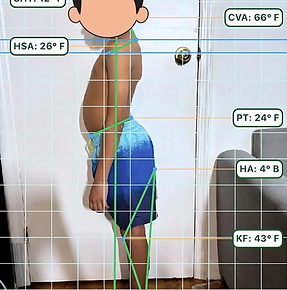
One of the first things I check is whether a child's head sits directly over their shoulders or pushes forward. Forward head posture is incredibly common in kids who spend a lot of time on screens. Their chin juts out, and if you look from the side, their ear is noticeably in front of their shoulder line.
Try this simple test: have your child stand naturally against a wall. If the back of their head doesn't touch the wall without them tilting it back, that's a sign of forward head posture. Both my kids (ages 5 and 9) do this check with me regularly, and it takes about five seconds.
Rounded Shoulders and Upper Back
Rounded shoulders are probably the most recognizable sign of bad posture in kids. When a child's shoulders roll forward and their upper back curves more than it should, it creates that classic "slouch" look. But many parents only notice this when the child is sitting. I always encourage families to watch how their child stands too.
Look at your child from behind while they're standing in a relaxed position. Can you see their shoulder blades poking out prominently? Are their palms facing backward instead of toward their body? These are clues that their chest muscles are tight and their upper back muscles aren't doing their job.
Pelvic Tilt and Lower Back Curve
This one surprises a lot of parents. Bad posture in kids isn't always about the upper body. The pelvis plays a huge role. If your child stands with their belly poking forward and their lower back arching deeply, that's called an anterior pelvic tilt. It's one of the most common child posture problems I see, especially in kids aged 4 to 8.
On the flip side, some children tuck their pelvis under and flatten their lower back completely. Both patterns affect how the spine handles load during sitting, standing, and physical activity. A simple way to check is to have your child stand sideways in front of a mirror. The lower back should have a gentle, natural curve, not a deep arch or a completely flat line.
Feet, Knees, and Leg Alignment
Posture isn't just about the spine. The feet are the foundation for everything above. I always tell parents to look at how their child stands barefoot on a hard floor. Do their feet roll inward? Do their arches flatten completely? Are their knees touching while their ankles are apart? These are all signs that the body's alignment is off from the ground up.
Flat feet and knock knees often contribute to posture issues higher up the chain. If you've noticed these patterns, my posts on why early posture intervention matters can help you understand the bigger picture.

How to Tell If Your Child Has Bad Posture: A Simple Home Check
Parents often ask me, "How do I actually know if my child's posture is a problem or just normal for their age?" Here's a straightforward routine I recommend. It takes less than five minutes and doesn't require any equipment.
The Wall Test: Have your child stand with their back against a flat wall. Their heels, buttocks, upper back, and the back of their head should all touch the wall comfortably. If any of those four points don't make contact, that area may need attention.
The Side Photo: Take a photo of your child from the side while they stand naturally (don't tell them to "stand up straight" first). Look at the imaginary line from their ear to their shoulder to their hip to their ankle. In good alignment, these points stack roughly on top of each other.
The Shoe Check: Flip your child's everyday shoes over and look at the soles. Uneven wear patterns tell a story. If one side of the heel is worn down much more than the other, the feet are rolling in or out during walking. My footwear guide covers how to pick shoes that support healthy foot development.
The Sitting Watch: Observe your child during homework or screen time without them knowing you're watching. Do they slump to one side? Does their head drop far forward? Do they sit in a W-position? That W-sitting pattern is particularly worth paying attention to. I've written a detailed guide on why W-sitting concerns parents and what to know that goes deeper into this topic.
What Causes Bad Posture in Kids in the First Place?
Understanding the root causes helps you know what to change. In my experience, child posture problems usually come from a combination of factors, not just one thing.
Too much sitting. The average school-age child spends 7 to 10 hours a day sitting between school, homework, meals, and screen time. That volume of sitting weakens the muscles that hold the body upright. Research published by the National Institutes of Health has shown a clear link between prolonged sitting in children and increased postural deviations.
Weak core and back muscles. Kids who don't get enough varied movement (climbing, crawling, balancing, hanging) often lack the core strength to maintain good alignment. It's not about doing crunches. It's about whole-body movement that builds stability naturally.
Heavy or poorly fitted backpacks. A backpack that's too heavy or worn on one shoulder forces the body to compensate. Over time, this creates muscle imbalances. The American Academy of Orthopaedic Surgeons recommends that a child's backpack weigh no more than 10 to 20 percent of their body weight.
Furniture that doesn't fit. Most household chairs and desks are designed for adults. When a child sits at a table where their feet dangle and their arms reach up to write, their body adapts in ways that reinforce bad posture in kids. A simple footstool under the desk can make a meaningful difference.

When Should You Be Concerned About Your Child's Posture?
Not every postural quirk is a problem. Children's bodies are developing, and some asymmetries are completely normal at certain ages. Toddlers often have flat feet and a slight belly-forward stance. That's part of typical development.
What I look for as a specialist is whether a pattern persists past the age when it should resolve, or whether it gets more pronounced over time. Here are some situations where I'd recommend getting a closer look:
Your child complains of back, neck, or leg pain regularly
One shoulder or hip appears noticeably higher than the other
Their head consistently tilts to one side
Flat feet or inward-rolling ankles persist past age 6
They avoid physical activities because of discomfort or fatigue
You notice a visible curve in their spine when they bend forward
If any of these apply, it doesn't mean something is seriously wrong. It means it's worth paying closer attention and, in many cases, working on targeted strengthening and alignment at home. The earlier you address these patterns, the easier they are to correct.
What You Can Do About Signs of Poor Posture in Children
Once you've identified the signs, the natural next question is: what do I do about it? The good news is that most child posture problems respond well to consistent, low-effort changes at home.
Build movement into the day. Aim for your child to move their body in varied ways for at least 60 minutes a day. That doesn't have to be organized sports. Climbing at the playground, walking the dog, doing a short stretching routine before bed: all of it counts. Movement variety is what builds the balanced strength that supports good posture.
Adjust the environment. Make sure your child's feet reach the floor (or a footstool) when they sit at a desk. Raise or lower the chair so their elbows bend at roughly 90 degrees while writing. If they use a tablet, prop it up at eye level instead of laying it flat on a table or their lap.
Try short posture-focused activities. Simple activities like wall angels, standing on one foot while brushing teeth, or carrying a beanbag on their head while walking across the room can make posture work feel like a game. Kids respond much better to playful movement than to being told to "sit up straight." I cover structured approaches to these kinds of activities in my Posture and Feet course, which walks families through video-guided routines designed for kids.
Skip the constant reminders. Telling your child "stand up straight" 20 times a day doesn't build lasting habits. It creates frustration for everyone. Instead, focus on building strength and awareness through movement. When the muscles are strong enough to hold good posture, the body does it more naturally without nagging.
You May Also Like
Test Your Knowledge: Signs of Poor Posture in Children
Q1: What's the easiest way to check for forward head posture at home?
a) Watch them walk from behind b) Have them stand against a wall and see if their head touches c) Ask them to touch their toes d) Check their shoe soles
Answer: b) Have them stand against a wall. If the back of their head doesn't touch without tilting, that's a sign of forward head posture.
Q2: What does uneven shoe sole wear typically indicate?
a) The shoes are too big b) The child runs too much c) The feet are rolling in or out during walking d) The shoes are low quality
Answer: c) Uneven wear patterns mean the feet are rolling in or out, which affects alignment up the entire body.
Q3: What's a common sign of anterior pelvic tilt in children?
a) Rounded shoulders b) Belly poking forward with a deep lower back arch c) Head tilting to one side d) Flat feet
Answer: b) A belly that pokes forward with a deep arch in the lower back is the hallmark of anterior pelvic tilt.
Q4: Why is telling your child to "sit up straight" not the best approach?
a) It hurts their feelings b) It only works for children over 10 c) It doesn't build the muscle strength needed for lasting posture habits d) It makes them slouch more
Answer: c) Verbal reminders don't build the muscle strength needed. Playful movement and strengthening activities create lasting change.
Q5: At what point should flat feet in a child prompt closer attention?
a) At birth b) By age 2 c) If they persist past age 6 d) Only if the child complains of pain
Answer: c) Flat feet are normal in toddlers, but if they persist past age 6, it's worth paying closer attention and potentially working on foot strengthening.
Get a Personal Assessment for Your Child
If you've spotted some of these signs and want expert eyes on your child's specific situation, I offer a Personal Diagnostic where I review photos and videos of your child's posture and give you a personalized plan. It takes the guesswork out of knowing what to focus on and gives you clear next steps.
The signs are there if you know where to look, and the earlier you notice them, the simpler the path to better alignment becomes.




Comments