Dance and Movement for Kids: Why Rhythm Builds Better Posture
- Juliana Lucky

- 1 hour ago
- 7 min read
Most parents do not think of dance as a posture exercise. They see it as fun, as creative expression, as something kids do at birthday parties or in front of the TV. But from a movement science perspective, dance is one of the most complete activities a child can do for their body. It trains balance, coordination, core strength, spatial awareness, and postural alignment, all at the same time, all without the child realizing they are working on any of it.
In my work as a posture and alignment specialist, I regularly recommend dance and rhythmic movement for children who resist structured exercises. A child who will not do 10 heel raises will happily dance for 20 minutes. The muscles get trained either way. The dance benefits for kids posture are real and measurable, and they come wrapped in something children actually want to do. Here is why dance works and how to bring more of it into your family's routine.
How Dance Builds Posture from the Ground Up
Posture is not something you hold. It is something your body does automatically based on the strength, coordination, and awareness of the muscles that support it. Dance trains all three of those systems simultaneously, which is why it has such a strong effect on how a child carries themselves.
A study published in the Journal of Sports Science and Medicine found that children who participated in regular dance programs showed significant improvements in postural stability, balance, and motor coordination compared to children who did not. The researchers noted that the combination of rhythmic timing, weight shifting, and full-body movement created a unique training stimulus that isolated exercises could not replicate.
When a child dances, they are constantly shifting weight from one foot to the other, which trains ankle stability and core strength. They are reaching, turning, and bending, which builds spinal mobility. They are moving their arms and legs in coordination with a beat, which develops the neural pathways that control smooth, efficient movement. All of these skills transfer directly to how the child stands, sits, and walks during the rest of the day.
Dance also trains what movement scientists call motor timing, which is the ability to coordinate actions with an external rhythm. Children with strong motor timing tend to have better postural control because their muscles activate in the right sequence and with the right amount of force. This is something that repetitive exercises alone do not develop as effectively.
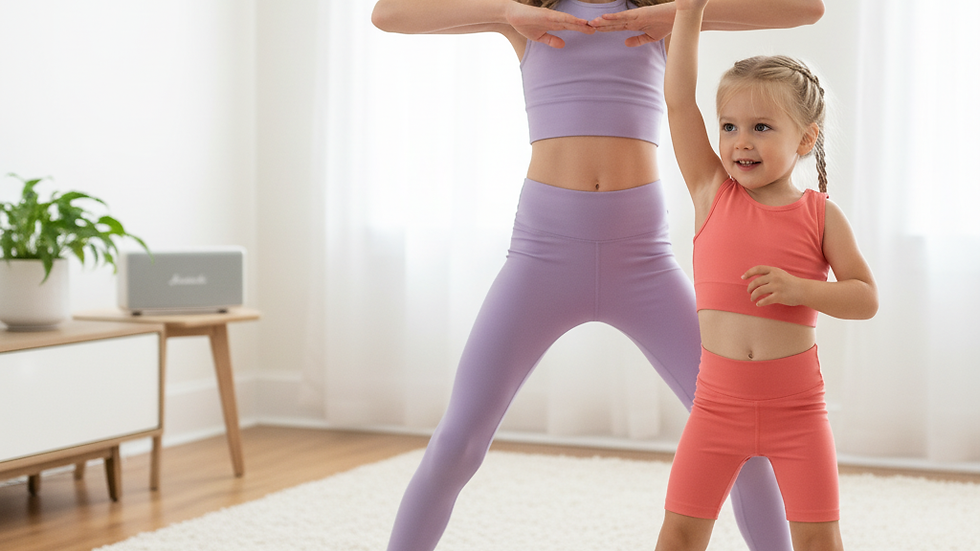
Why Rhythm Matters for Movement and Posture in Children
Rhythm is not just about music. It is about the body's ability to repeat coordinated actions in a predictable pattern. Walking is rhythmic. Climbing stairs is rhythmic. Breathing is rhythmic. When a child has a well-developed sense of rhythm, their movements become more fluid, more efficient, and less effortful.
Children who struggle with rhythm often show it in their movement quality. Their gait may look uneven or jerky. They may have trouble coordinating arm swings while walking. They may fatigue quickly during physical activity because their muscles fire in inefficient patterns. Dance provides a structured way to practice rhythmic movement in a context that is engaging and low-pressure.
The movement and rhythm children develop through dance carries over into sports, playground activities, and even classroom behavior. A child who can coordinate their body rhythmically tends to sit more comfortably at a desk, transition between activities more smoothly, and control their movements better in crowded spaces. These are all downstream effects of improved motor timing and body awareness.
Dance Exercises for Kids You Can Do at Home
You do not need a dance studio or formal training to bring the posture benefits of dance into your child's life. These activities work in any living room with a little floor space and some music:
1. Follow the Leader Dance
One person leads and the others copy their movements in time with the music. Start with simple actions like marching in place, clapping, and stepping side to side. Gradually add more complex moves: turns, lunges, arm circles, or jumping. Switch leaders every minute. This builds body awareness, coordination, and the ability to observe and replicate movement patterns. Play 2 to 3 songs and take turns leading.
2. Slow Motion Dancing
Put on a slow song and challenge your kids to dance as slowly as possible. Every movement should be deliberate and controlled. Lifting an arm takes 5 seconds. A step takes 3 seconds. This is surprisingly difficult because it requires constant muscle engagement to control the speed. Slow motion dancing builds the deep stabilizing muscles of the trunk and legs more than fast dancing does. It also teaches children to be aware of every part of their body during movement.
3. Freeze Dance with Poses
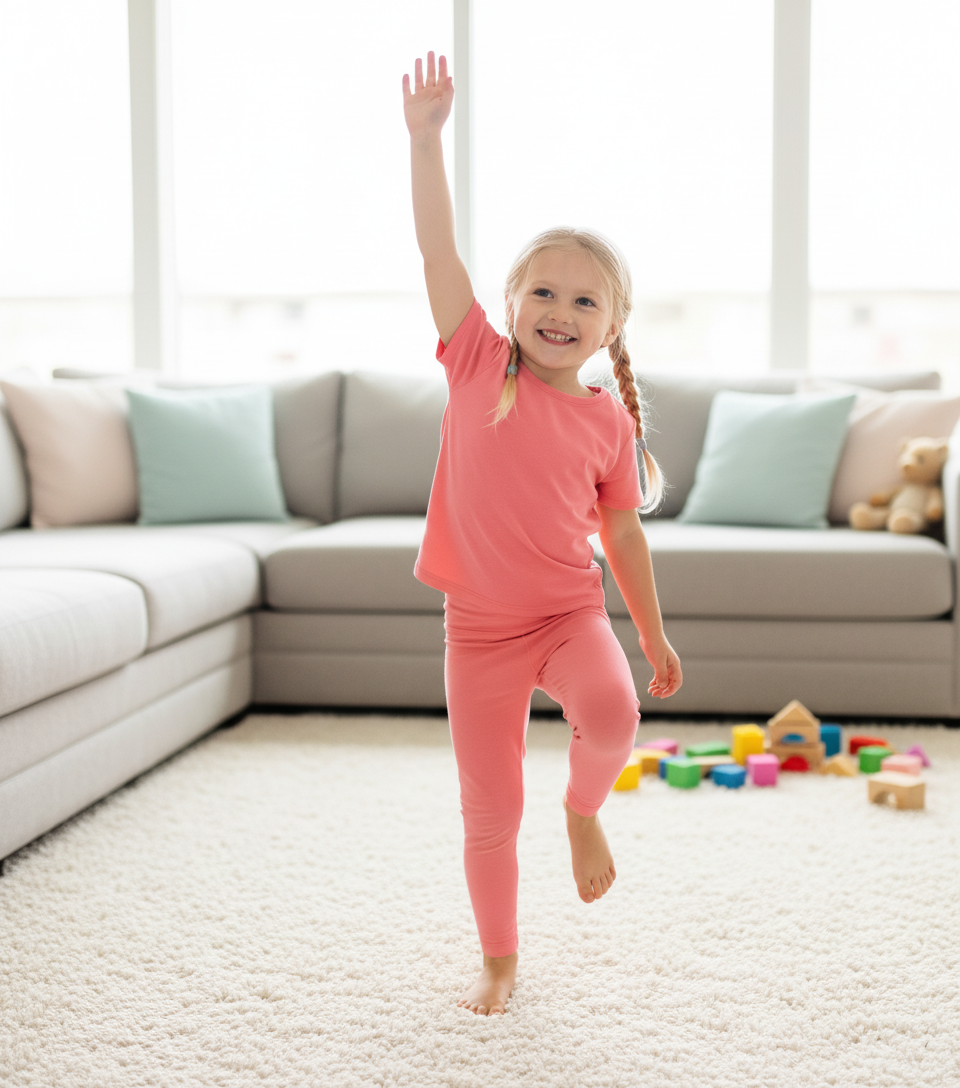
Play upbeat music and let everyone dance freely. When the music stops, call out a pose: "Tree pose." "Superhero." "Flamingo." The child must freeze in that shape and hold it for 5 to 10 seconds. This combines the cardio and coordination of free dance with the balance and body awareness of yoga-style poses. It is one of the best dance exercises for kids because it trains both dynamic movement and static control.

4. Mirror Dance
Two people face each other. One leads, the other mirrors their movements exactly, like a reflection. Start without music, then add a slow beat. The leader moves arms, legs, and torso while the follower tries to stay perfectly in sync. This activity develops spatial awareness, motor planning, and the ability to process visual information while controlling the body. My daughters play this game often, and the concentration on their faces tells me exactly how hard their brains are working.
5. Animal Dance Party
Combine music with animal movement. When the music plays, the child dances like the announced animal: stomp like an elephant, hop like a frog, slither like a snake, prance like a horse, waddle like a penguin. Call out a new animal every 20 to 30 seconds. Each animal engages different muscle groups and movement patterns, making this a full-body workout disguised as play. This is also a great screen time alternative that kids ask to repeat.
6. Ribbon or Scarf Dancing
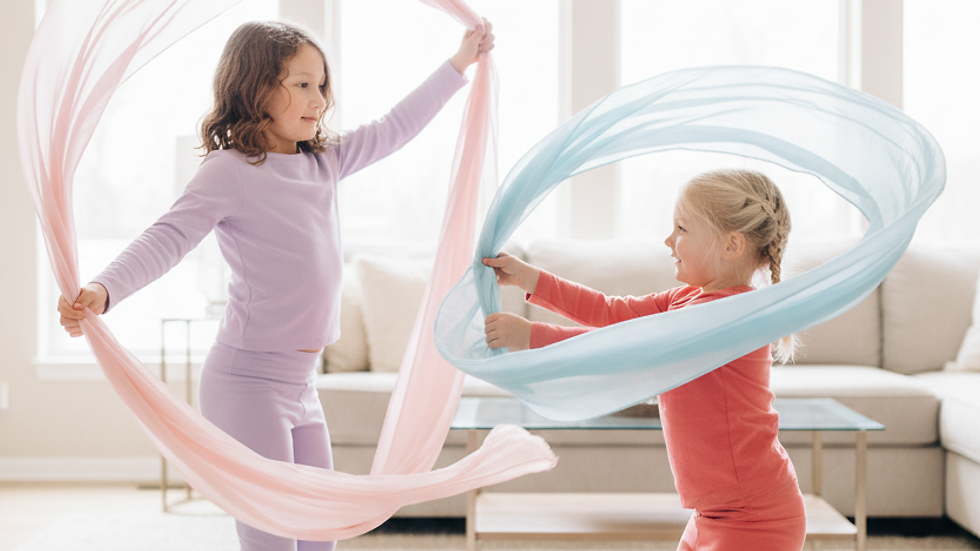
Give each child a long scarf or ribbon and put on flowing music. Challenge them to keep the scarf moving in big, smooth patterns: circles, figure eights, waves. The arms work overhead and across the body, which opens the chest, stretches the shoulders, and builds upper body endurance. For children who tend to round their shoulders, this is one of the most enjoyable corrective activities because it naturally encourages an upright, open posture.
Building a Dance Habit in Your Family
The best exercise habit is the one your family actually does. Dance works because the barrier to entry is low and the enjoyment is high. Here is how to make it stick:
Pick a daily dance time. After school, before dinner, or as part of your family exercise routine. Just 10 to 15 minutes makes a difference. Consistency matters more than duration.
Let kids choose the music. When children pick the songs, they feel ownership over the activity. Their engagement goes up, and so does the effort they put in.
Join in yourself. Kids are far more likely to dance regularly if a parent dances with them. You do not need to be a good dancer. You need to be a willing one.
Mix structured and free dance. Alternate between the specific exercises above and periods of free dance where kids move however they want. Both have value. Structured dance builds specific skills; free dance builds creativity and self-expression.
The American Academy of Pediatrics recommends 60 minutes of physical activity daily for children ages 6 and up. Dance can cover a significant portion of that. According to KidsHealth, activities that children enjoy are the ones they stick with long term, which makes dance one of the most sustainable movement habits you can build.
In my family, Friday evenings are dance night. We push the coffee table aside, put on a playlist, and spend 20 minutes moving together. My older daughter creates choreography. My younger one spins in circles. I do my best to keep up. It is the highlight of our week, and the posture benefits are a bonus that shows up in how both girls stand and move every other day. Finding ways to get kids to exercise daily gets easier when the exercise feels like a celebration rather than a task.
You May Also Like
Test Your Knowledge: Dance and Posture for Kids
See how much you picked up from this post. Check your answers below each question.
1. How does dance build posture in children?
a) By stretching the hamstrings only
b) By training balance, coordination, core strength, and postural alignment simultaneously
c) By making kids stand still
d) By strengthening only the arms
Answer: b) By training balance, coordination, core strength, and postural alignment simultaneously. Dance is a full-body activity that develops all the systems that support good posture at the same time.
2. What is motor timing, and why does it matter for posture?
a) How fast a child can run
b) The ability to coordinate actions with an external rhythm, leading to better muscle activation patterns
c) How long a child can sit still
d) The speed of reflexes
Answer: b) The ability to coordinate actions with an external rhythm, leading to better muscle activation patterns. Strong motor timing means muscles fire in the right sequence with the right force, which supports efficient posture.
3. Why is slow motion dancing especially good for building posture muscles?
a) It is easier than fast dancing
b) It requires constant muscle engagement to control the speed of each movement
c) It burns more calories
d) It only works the legs
Answer: b) It requires constant muscle engagement to control the speed of each movement. Slow, deliberate movement activates the deep stabilizing muscles of the trunk and legs more intensely than fast dancing.
4. What does ribbon or scarf dancing naturally encourage?
a) Slouching forward
b) An upright, open posture with chest opening and shoulder stretching
c) Sitting down
d) Only lower body movement
Answer: b) An upright, open posture with chest opening and shoulder stretching. Moving arms overhead and across the body with a scarf naturally opens the chest and works against the rounded-shoulder pattern.
5. How much daily dance time is enough to see posture benefits?
a) 1 hour minimum
b) 10 to 15 minutes of consistent daily practice
c) 5 minutes once a week
d) 30 seconds
Answer: b) 10 to 15 minutes of consistent daily practice. Consistency matters more than duration. A short daily dance session builds the strength and coordination that support better posture over time.
More Movement, Better Posture
Dance is one of the best ways to build the strength and coordination that support lasting posture. For a structured program that combines movement, exercises, and posture correction in one place, my Posture and Feet course gives families a clear, video-guided path to better alignment.
When movement is joyful, children come back to it on their own, and that is when the real changes happen.





Comments