Overpronation in Children's Feet: What Parents Should Know
- Juliana Lucky

- 2 hours ago
- 7 min read
If you have noticed that your child's feet seem to roll inward when they stand or walk, you are probably looking at overpronation. It is one of the most common foot alignment patterns I see in children, and it is also one of the most misunderstood. Some parents are told it is nothing to worry about. Others are rushed into expensive orthotics before anyone has explained what is actually happening.
The reality sits somewhere in the middle. Overpronation in children is often a normal phase of foot development that resolves on its own. But in some cases, it persists and starts affecting the ankles, knees, and posture. Understanding the difference between typical development and a pattern that needs attention is one of the most valuable things a parent can learn. Here is what I have seen across 15 years of working with children's alignment.
What Is Overpronation in Children's Feet?
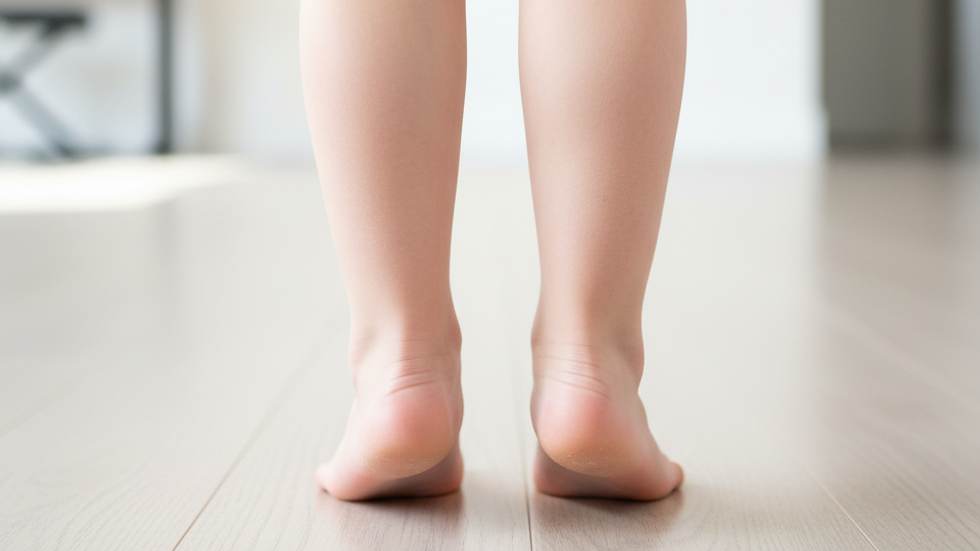
Pronation is the natural inward roll of the foot that happens with every step. When the foot strikes the ground, it pronates slightly to absorb shock. This is normal and necessary. Overpronation happens when the foot rolls inward too far, collapsing the arch toward the ground and shifting the ankle joint out of its ideal alignment.
In children with kids foot overpronation, you will often see the following: the inner ankle bone appears more prominent, the arch looks flattened or absent, the heel leans inward when viewed from behind, and the shoe wears down unevenly on the inner edge. These signs are easier to spot when the child is standing barefoot on a hard surface.
According to research published in the Journal of Foot and Ankle Research, overpronation in childhood is closely associated with the presence of flexible flat feet. The two conditions often appear together because a flattened arch allows the foot to roll inward more than it should. Understanding whether your child's feet are showing signs of flat feet is a helpful first step in assessing the situation.
When Is Overpronation Normal in Kids?
This is the question I get asked most often, and the answer depends heavily on age. In toddlers and children under age 3, overpronation is almost always a normal part of foot development. Young children have a thick fat pad on the sole of the foot that masks the developing arch. Their ligaments are naturally lax, which allows more mobility (and more pronation) in the foot and ankle joints.
Between ages 3 and 6, the arch gradually forms as the fat pad thins and the muscles of the foot strengthen through walking, running, and climbing. Most children's feet straighten up considerably during this period. The American Academy of Pediatrics notes that flexible flat feet in children under 6 are common and typically require no treatment.
After age 6, if the overpronation persists and the arch does not appear when the child stands on tiptoe, it may be worth paying closer attention. Persistent flat feet overpronation children show after this age can start creating a chain reaction: the ankle rolls inward, the knee follows, the hip compensates, and the posture shifts. That does not mean every child with overpronation at age 7 has a problem, but it does mean monitoring and possibly targeted support could help.
How Overpronation Affects the Rest of the Body
The foot is the foundation of the body's alignment. When the foot rolls inward, the effects travel upward through the entire chain:
Ankles: The ankle rolling inward kids experience with overpronation puts extra stress on the inner ankle ligaments. Over time, this can lead to ankle instability and a higher risk of sprains. Strengthening the ankle muscles can help counteract this. I cover specific exercises in my post on ankle strengthening for kids.
Knees: When the foot pronates excessively, the shin bone rotates inward, which pulls the kneecap off its ideal tracking path. This can cause knee pain during running or jumping, and it is one of the reasons knock knees and overpronation often appear together.
Hips and pelvis: The inward rotation from the foot and shin travels up to the hip, which may rotate inward to compensate. This changes how the child walks and can contribute to hip tightness or discomfort during activity.
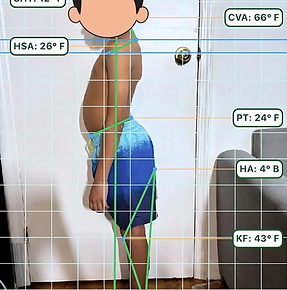
Spine and posture: An unstable base leads to compensations higher up. Children with significant overpronation often show increased forward lean, rounded shoulders, or asymmetric posture as the body tries to find balance over a misaligned foundation.
This chain reaction does not happen overnight, and it does not happen in every child with overpronation. But understanding the connection helps parents see why addressing foot alignment early, when it is easiest to influence, can prevent more complex issues later.

What Parents Can Do About Overpronation in Children
The approach I take depends on the child's age, the severity of the overpronation, and whether it is causing any symptoms. Here are the strategies I recommend most often:
Encourage Barefoot Time
Walking barefoot on varied surfaces (grass, sand, carpet, gravel) activates the intrinsic muscles of the foot that support the arch. These muscles weaken when shoes do all the work. For children with mild overpronation, increasing barefoot time is one of the most effective first steps. I recommend at least 30 to 60 minutes of barefoot activity daily on safe surfaces.
Targeted Foot and Ankle Exercises
Specific exercises that strengthen the arch, the ankle stabilizers, and the tibialis posterior (the muscle that controls pronation) can make a meaningful difference. Flat feet exercises for kids target many of the same muscles that overpronation weakens. Towel scrunches, heel raises, and single-leg balance are among the most effective exercises for this pattern.
Choose Supportive but Flexible Footwear
Children with overpronation benefit from shoes that have a firm heel counter (the back of the shoe that cups the heel) and a flat, flexible sole. The heel counter helps keep the ankle from collapsing inward, while the flexible sole still allows the foot muscles to work. Avoid shoes with built-in arch supports unless specifically recommended by a specialist. For a deeper look at footwear choices, my guide on barefoot shoes for kids covers the principles in detail.
Monitor and Reassess
For children under 6, the best approach is often to monitor and give the foot time to develop. Take photos of your child's feet from behind every 3 to 6 months to track changes. If the pronation is improving, continue with barefoot time and exercises. If it stays the same or worsens after age 6, a professional assessment can clarify whether more targeted intervention is needed.

When to Seek Professional Help for Overpronation
Most children with overpronation do not need medical intervention. But there are situations where professional guidance is the right next step:
The child is over 6 and the arch does not appear at all, even when standing on tiptoe.
The child experiences pain in the feet, ankles, knees, or hips during or after physical activity.
One foot pronates significantly more than the other, suggesting an asymmetry that may need individual assessment.
The overpronation is severe enough that the inner ankle bone nearly touches the ground when standing.
The child avoids physical activity because their feet or legs feel uncomfortable.
According to KidsHealth, children with flat feet that cause pain or functional limitations should be evaluated by a healthcare provider. A specialist can determine whether the overpronation is flexible (the arch forms when the foot is not bearing weight) or rigid (the arch is absent in all positions), which determines the appropriate treatment path.
You May Also Like
Test Your Knowledge: Overpronation in Children
See how much you picked up from this post. Check your answers below each question.
1. What is overpronation?
a) The foot rolling outward too much
b) The foot rolling inward too much, collapsing the arch toward the ground
c) Walking on the toes
d) Having a very high arch
Answer: b) The foot rolling inward too much, collapsing the arch toward the ground. Some inward rolling is normal, but overpronation goes beyond what the foot needs for shock absorption.
2. At what age is overpronation considered normal in most children?
a) Any age
b) Under age 3
c) Over age 10
d) Only in adults
Answer: b) Under age 3. Toddlers naturally have lax ligaments and a fat pad that makes the foot appear flat and pronated. The arch typically develops between ages 3 and 6.
3. How does overpronation affect the knees?
a) It makes the knees stronger
b) The inward shin rotation pulls the kneecap off its ideal tracking path
c) It has no effect on the knees
d) It only affects the ankles
Answer: b) The inward shin rotation pulls the kneecap off its ideal tracking path. This can cause knee pain during running or jumping and is one reason overpronation and knock knees often appear together.
4. What is one of the most effective first steps for mild overpronation?
a) Custom orthotics immediately
b) Surgery
c) Increasing barefoot time on varied surfaces
d) Wearing high-top shoes at all times
Answer: c) Increasing barefoot time on varied surfaces. Walking barefoot activates the intrinsic foot muscles that support the arch and help control pronation.
5. When should a parent seek professional help for overpronation?
a) As soon as the child starts walking
b) When the child is over 6 with no arch even on tiptoe, or experiences pain during activity
c) Only if the child cannot walk at all
d) Never, it always resolves on its own
Answer: b) When the child is over 6 with no arch even on tiptoe, or experiences pain during activity. Pain, significant asymmetry, or persistent flat feet after age 6 warrant a professional evaluation.
Get a Personal Assessment for Your Child
Every child's feet are different, and the right approach depends on the specific pattern you are seeing. My personal diagnostic gives you a detailed assessment of your child's foot alignment, posture, and the specific exercises that will help their situation most.
Understanding what your child's feet need is the first step toward helping them move with confidence and comfort.





Comments