Rounded Shoulders in Kids: 5 Exercises That Help
- Juliana Lucky

- 4 hours ago
- 10 min read
Rounded shoulders are one of the most common postural patterns I see in children who spend long hours sitting at desks or looking down at screens. The shoulders roll forward, the chest collapses inward, and over time the upper back starts to curve. It looks like a child who is permanently hunching, even when they are standing.
In my 15 years working with children's posture, I have found that rounded shoulders respond well to consistent, targeted exercise. The muscles across the chest get tight, and the muscles in the upper back get weak. Correcting rounded shoulders means stretching what is short and strengthening what is long. The five exercises below are ones I use regularly with families. They require no equipment beyond a towel and a doorway, and most children can do them in under 10 minutes.
What Causes Rounded Shoulders in Children
Rounded shoulders develop when the muscles in the front of the body (the chest and front deltoids) become shorter and tighter than the muscles in the upper back (the rhomboids, mid-trapezius, and rear deltoids). This imbalance pulls the shoulder blades forward and rotates the arms inward. Researchers call this pattern "upper crossed syndrome," and a study in the Journal of Physical Therapy Science found it is increasingly common in school-age children.
The biggest driver is prolonged sitting with poor positioning. A child who sits at a desk for six hours, then comes home and spends another two hours on a tablet, is training their body to hold that forward-shoulder position. The muscles adapt to whatever shape the body holds most often. If that shape is a slump, the slump becomes the default.
I wrote a detailed breakdown of how screen time affects posture in kids, and rounded shoulders are the most visible result. But screens are not the only cause. Heavy backpacks, low confidence in older children, and simply not enough physical activity can all contribute. The American Academy of Pediatrics has noted that sedentary behavior in childhood can affect musculoskeletal development, and the shoulders are often the first place that shows.
The encouraging part is that children's bodies are still growing and adapting. The same plasticity that allows rounded shoulders to develop also allows them to be corrected. With the right exercises done a few times a week, most children see noticeable improvement within four to six weeks.

5 Rounded Shoulders Exercises for Kids
These exercises target the two sides of the rounded shoulders problem: tight chest muscles and weak upper back muscles. I recommend doing all five in order, starting with the stretch (Doorway Chest Stretch) to open the chest, then moving into the strengthening exercises. Each exercise is safe for children ages 5 and up. For kids under 5, I suggest starting with just the first two and adding the others as they build comfort.
1. Doorway Chest Stretch
This stretch targets the pectoralis muscles across the chest, which are almost always tight in children with rounded shoulders. Opening the chest is the first step before any strengthening work.
Stand in an open doorway with one foot slightly in front of the other.
Place both forearms on the door frame, elbows bent at about 90 degrees, upper arms level with the shoulders.
Lean gently forward through the doorway until a stretch is felt across the front of the chest.
Hold for 20 to 30 seconds. Breathe normally throughout.
Step back, rest for 10 seconds, then repeat 2 more times.
Younger children may need a narrower doorway or a parent standing behind them for guidance. The stretch should feel like a gentle pull across the chest, not pain. If your child's elbows slide up above shoulder height, the stretch shifts away from the chest, so keep an eye on arm position.
2. Wall Angels
Wall angels are one of the best exercises for retraining the shoulder blades to sit flat against the rib cage. They strengthen the lower trapezius and serratus anterior while also stretching the chest. I include these in almost every program for children who slouch.
Stand with the back flat against a wall. The head, upper back, and tailbone should all touch the wall.
Raise both arms to form a "goalpost" shape: elbows bent at 90 degrees, backs of the hands and forearms pressing into the wall.
Slowly slide the arms up the wall, straightening the elbows, as if making a snow angel.
Slide back down to the starting position. Keep the arms in contact with the wall the entire time.
Do 8 to 12 repetitions. Aim for 2 sets.
The key to this exercise is keeping the lower back from arching away from the wall. If a child's back lifts off as the arms go up, that means the chest muscles are pulling hard. Have them reduce the range of motion and only slide up as far as they can while keeping the back flat. Over time, the range will increase as the chest loosens and the upper back gets stronger.
3. Reverse Snow Angels
This floor exercise targets the rhomboids and mid-trapezius, the muscles between the shoulder blades that pull them together. These muscles are typically the weakest in children with rounded shoulders.
Lie face down on a carpet or mat with arms extended straight out to the sides, palms facing the floor.
Lift both arms a few inches off the ground by squeezing the shoulder blades together.
Keeping the arms lifted, slowly sweep them in an arc from the sides toward the head, like making a snow angel in reverse.
Sweep the arms back down to the starting position. Lower them to the floor to rest.
Do 6 to 10 repetitions. Work up to 2 sets.
Children often try to use momentum or lift their entire torso off the ground. Cue them to keep the forehead lightly resting on the floor (or on a folded towel for comfort) and focus on moving only the arms. The movement should be slow and controlled. If 6 repetitions feel hard, that is a sign the upper back muscles need this exercise.
4. Towel Pull-Apart
This exercise mimics a resistance band pull-apart but uses a hand towel instead, which makes it accessible for any family. It strengthens the rear deltoids and rhomboids, both of which are needed to pull the shoulders back into a neutral position.
Hold a hand towel in front of the body at chest height, one hand on each end. Arms should be straight.
Pull the towel apart by driving the hands outward and squeezing the shoulder blades together.
Hold the fully pulled-apart position for 3 to 5 seconds.
Slowly release back to the starting position.
Repeat 10 to 15 times. Do 2 sets.
The towel will not actually stretch apart, but the effort of trying to pull it creates isometric tension in the upper back. My older daughter does these before homework. It takes less than two minutes and offsets the forward-shoulder position she holds while writing. For a more structured approach to posture exercises at home, I have a full breakdown of what to include and how often.
5. Prone Y-Raises
Prone Y-raises target the lower trapezius, which is the muscle responsible for pulling the shoulder blades down and back. When this muscle is weak, the shoulders ride up toward the ears and roll forward. Strengthening it helps anchor the shoulder blades in the correct position.
Lie face down on a carpet or mat with arms extended overhead in a Y shape, thumbs pointing toward the ceiling.
Keeping the forehead resting on the floor, lift both arms a few inches off the ground.
Squeeze the muscles between and below the shoulder blades. Hold for 3 to 5 seconds.
Lower the arms slowly back to the floor.
Do 8 to 12 repetitions. Build to 2 sets.
The thumbs-up hand position is important because it rotates the shoulder into external rotation, which is the opposite of the internally rotated position that rounded shoulders create. Even adults find this exercise challenging when the lower traps are weak. If your child can only lift the arms an inch, that is perfectly fine. The muscle is still working.
How to Build a Weekly Routine for Rounded Shoulders
Correcting rounded shoulders is not a one-time fix. It requires consistent practice over several weeks. I recommend three to four sessions per week, each lasting about 8 to 10 minutes. Here is a simple rotation:
Day 1: Doorway Chest Stretch + Wall Angels + Towel Pull-Apart (8 minutes)
Day 2: Doorway Chest Stretch + Reverse Snow Angels + Prone Y-Raises (8 minutes)
Day 3: All 5 exercises in one session (10 minutes)
Day 4 (optional): Doorway Chest Stretch + whichever exercise the child finds hardest (5 minutes)
Always start with the Doorway Chest Stretch. Opening the chest first makes the strengthening exercises more effective because the shoulder blades can move into a better position when the pecs are not pulling them forward. I also recommend pairing this routine with core exercises on alternate days. A strong core supports the upper body and prevents the torso from collapsing forward, which is often what initiates the rounded-shoulder pattern in the first place.
For children who sit at a desk for school, doing even two of these exercises during a break can make a meaningful difference. I have a guide on desk posture habits for kids that covers positioning, break schedules, and how to set up a workspace that doesn't fight against your child's body.
How to Tell If Your Child Has Rounded Shoulders
Rounded shoulders can be subtle in the early stages. Many parents notice it only when the pattern has become pronounced. Here are four signs to look for:
The "pencil test." Have your child stand with arms hanging naturally at their sides. Look at which direction the thumbs point. If the thumbs face each other (inward) rather than forward, the shoulders are likely rotated inward.
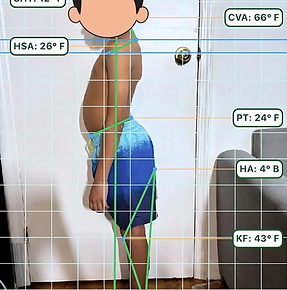
Visible upper back curve. When viewed from the side, a child with rounded shoulders will show a noticeable rounding of the upper back between the shoulder blades. This is more pronounced than the natural slight curve of the thoracic spine.
Shoulder blades that wing out. If the inner edges of the shoulder blades stick out from the back rather than lying flat, the muscles that hold them in place are not doing their job. This "winging" often accompanies rounded shoulders.
Neck and jaw tension. When the shoulders roll forward, the head shifts forward too. This puts extra strain on the neck muscles. Children with rounded shoulders sometimes complain of a sore neck, headaches, or jaw tightness, especially after long screen sessions.
According to KidsHealth from Nemours, musculoskeletal problems in children are best addressed early while the body is still developing. If you notice these signs in your child, starting with the exercises above is a reasonable first step. If the rounding is significant or does not improve after six to eight weeks of consistent exercise, a professional assessment is worth considering.
Common Mistakes When Correcting Rounded Shoulders
Telling a child to "stand up straight" is the most common approach parents try, and it is also the least effective. Verbal reminders address the symptom (the visible slump) without changing the underlying muscle imbalance. A child who is told to straighten up will pull their shoulders back for 30 seconds, then drift right back because the muscles that should hold them there are not strong enough yet.
Another mistake is focusing only on stretching or only on strengthening. Both sides of the equation matter. Stretching the chest without strengthening the upper back gives temporary relief but no lasting change. Strengthening the back without stretching the chest means the muscles are fighting against a shortened front, which limits results and can cause discomfort.
Posture braces are another question I get frequently. While they can serve as a short-term reminder, they do not build the muscle strength needed for long-term correction. The muscles need to work, not be supported by an external device. I view braces the same way I view verbal reminders: a temporary cue, not a solution.
You May Also Like
Test Your Knowledge: Rounded Shoulders in Kids
See how much you picked up from this post. Check your answers below each question.
1. What muscle imbalance causes rounded shoulders?
a) Tight hamstrings and weak glutes
b) Tight chest muscles and weak upper back muscles
c) Tight calves and weak ankles
d) Tight hip flexors and weak abs
Answer: b) Tight chest muscles and weak upper back muscles. The pectorals shorten while the rhomboids and mid-trapezius weaken, pulling the shoulders forward.
2. Why should the Doorway Chest Stretch be done before the strengthening exercises?
a) It warms up the legs
b) It opens the chest so the shoulder blades can move into a better position
c) It strengthens the core
d) It is the hardest exercise and should be done first
Answer: b) It opens the chest so the shoulder blades can move into a better position. Stretching tight pecs first allows the upper back muscles to work through a greater range during the strengthening exercises.
3. What does the "pencil test" check for?
a) Whether a child can hold a pencil correctly
b) Whether the child's thumbs point inward, indicating shoulder rotation
c) Whether the child's spine is straight
d) Whether the child's grip strength is adequate
Answer: b) Whether the child's thumbs point inward, indicating shoulder rotation. When the shoulders rotate inward, the thumbs naturally turn to face each other instead of pointing forward.
4. Why are posture braces not recommended as a long-term solution?
a) They are too expensive
b) They cause skin irritation
c) They do not build the muscle strength needed for lasting correction
d) They make rounded shoulders worse
Answer: c) They do not build the muscle strength needed for lasting correction. Braces support the shoulders externally but the muscles still need to be trained to hold the correct position on their own.
5. In the Prone Y-Raise, why should the thumbs point toward the ceiling?
a) It makes the exercise easier
b) It looks better for photos
c) It rotates the shoulder into external rotation, counteracting the rounded position
d) It targets the biceps more effectively
Answer: c) It rotates the shoulder into external rotation, counteracting the rounded position. Rounded shoulders involve internal rotation, so training the opposite movement helps restore a neutral shoulder position.
A Full Program Built Around These Exercises
These five exercises are a strong starting point for correcting rounded shoulders at home. For families who want a structured, video-guided program that addresses rounded shoulders along with overall posture and foot alignment, my Posture and Feet course provides age-appropriate progressions so you and your child always know what to do next.
Consistent effort with the right exercises can change the way your child stands, sits, and moves. A few minutes a day adds up to a real difference.





Comments