Movement Breaks During Homework: Keep Kids Focused and Active
- Juliana Lucky

- 3 days ago
- 8 min read
Most kids hit a wall about 15 to 20 minutes into homework. Their eyes glaze over, their pencil slows down, and their body starts to slouch. That slouch is not laziness. It is the brain and body sending a clear signal: they need to move.
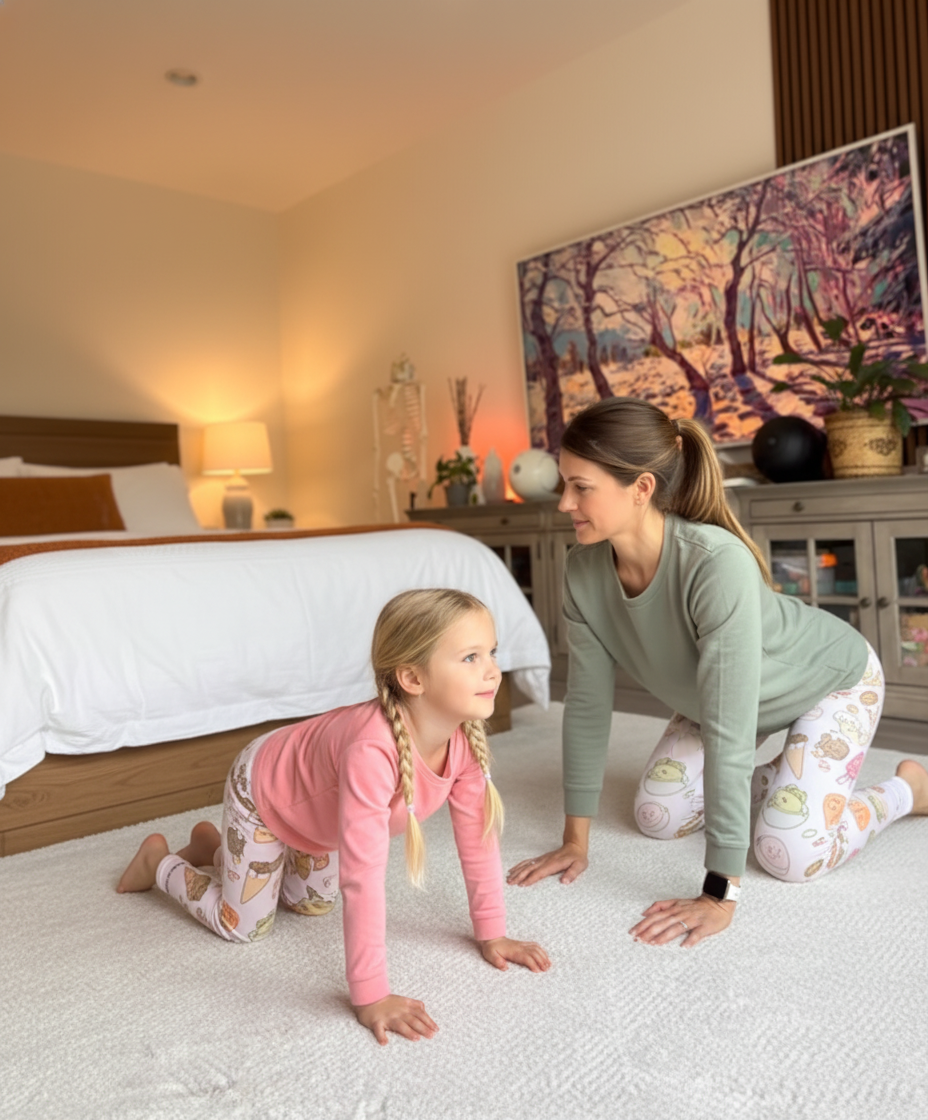
Movement breaks during homework kids can actually complete are short, simple, and surprisingly effective. A 30- to 60-second burst of physical activity resets attention, increases blood flow to the brain, and gives the spine a break from sitting. I use these with my own 9-year-old during her after-school homework sessions, and the difference in her focus before and after a quick break is obvious every single time.
Below, I will walk you through why these breaks work, 10 specific ones you can start using today, and a simple schedule that keeps homework on track without turning it into a battle.
Why Kids Need Movement Breaks During Homework
Children's attention spans are shorter than most parents realize. Research published in Frontiers in Psychology found that even brief bouts of physical activity improve cognitive function and attention in school-age children. The reason is straightforward: movement increases heart rate, which pushes more oxygen-rich blood to the brain. That extra oxygen fuels the prefrontal cortex, the part of the brain responsible for focus, planning, and problem-solving.
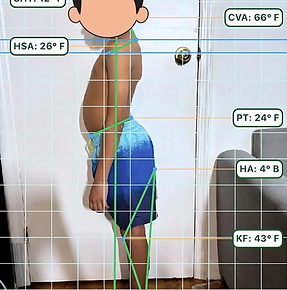
There is also a posture component. When kids sit at a desk for extended periods, the head drifts forward, the shoulders round, and the core muscles disengage. I wrote about this pattern in detail in my post on desk posture for kids at school. The same thing happens at the kitchen table during homework. A movement break forces the body out of that collapsed position, activates the postural muscles, and resets the spine to a more neutral alignment.
The CDC recommends 60 minutes of daily physical activity for children ages 6 and older. Most kids do not get that in a school day alone. Building short active breaks into homework time contributes to that daily total while also making the homework itself more productive.
10 Quick Movement Breaks for Homework Time
Each of these takes 30 to 60 seconds. They require no equipment, no special space, and no change of clothes. The goal is to get blood flowing and posture reset without losing the homework momentum.
1. Stand and Stretch Reach
Stand up from the chair. Reach both arms overhead as high as possible, pressing the palms together. Hold for 5 seconds. Then bend to the left for 5 seconds, then to the right. This opens the chest, lengthens the spine, and counteracts the hunched-forward homework position. My daughter calls this one "the tall tree" and does it automatically now when she feels herself sinking into the chair.
2. Desk Push-Ups
Place both hands on the edge of the desk or table, shoulder-width apart. Step feet back until the body is at an angle. Do 10 push-ups against the desk. This activates the chest, shoulders, and core without requiring floor space. It also wakes up the upper body muscles that go dormant during prolonged sitting.
3. Chair Squats
Stand in front of the chair. Sit down slowly (count to 3), then stand back up. Repeat 10 times. The controlled lowering phase builds leg and core strength, and the repeated sit-to-stand pattern gets blood pumping to the legs and brain. For younger kids, reduce the count to 5 repetitions.
4. Arm Circles
Stand up and extend both arms out to the sides. Make small circles forward for 15 seconds, then backward for 15 seconds. Increase the circle size gradually. This loosens the shoulder joints that tighten up during writing and typing. It takes less than 30 seconds and can be done right next to the desk.

5. Jumping Jacks Burst
Do 20 jumping jacks as fast as possible. This is the simplest cardiovascular reset on the list. It elevates heart rate quickly, sends oxygen to the brain, and takes about 20 seconds. For kids who live in apartments or need a quieter option, try "silent jumping jacks" where the feet step side to side instead of jumping.
6. Wall Sit Hold
Lean against a wall and slide down until the thighs are parallel to the floor. Hold for 20 to 30 seconds. This builds leg endurance and engages the core without any impact or noise. Kids can time themselves and try to beat their previous record each homework session, which adds a motivational element.
7. Cross-Body Toe Touches
Stand with feet shoulder-width apart. Reach the right hand down to the left foot, then the left hand to the right foot. Alternate for 10 repetitions on each side. The cross-body movement activates both hemispheres of the brain, which can help kids transition between different types of homework (from math to reading, for example). It also stretches the hamstrings and lower back.
8. Shoulder Blade Squeeze
This one can be done sitting or standing. Pull the shoulder blades together as if trying to hold a pencil between them. Hold for 5 seconds, release, and repeat 10 times. I recommend this break specifically because it directly targets the muscles that weaken during screen time and homework slouching. It is a quick posture reset that trains the body to hold the shoulders back.

9. Balance Challenge
Stand on one foot and hold for 15 seconds, then switch. To make it harder, close the eyes or stand on a pillow. Single-leg balance activates the ankle stabilizers, the hip muscles, and the deep core. It also requires concentration, which resets the brain's attention circuits. My daughter likes to do this while I quiz her on spelling words, which combines the break with the homework itself.
10. Shake It Out
Stand up and shake the entire body for 15 seconds. Shake the hands, the arms, the legs, the head. Let everything be loose and floppy. Then stop and stand tall with good posture for 5 seconds before sitting back down. This sounds silly, but it releases muscle tension that builds up during focused work, and the contrast between shaking and standing tall reinforces good posture awareness.
A Movement Break Schedule That Works
The research on children's attention spans points to a consistent pattern: focus drops significantly after about 20 to 25 minutes of sustained mental effort. That number varies slightly by age (younger children fade faster), but 20 minutes is a reliable benchmark for kids ages 6 to 12.
Here is the schedule I use with my daughter and recommend to the families I work with:
Minutes 0 to 20: Focused homework. No interruptions, no screens, no talking. Set a timer so the child knows a break is coming.
Minute 20: Movement break (pick any one from the list above). 30 to 60 seconds of activity, then a sip of water.
Minutes 21 to 40: Second focused homework block. Choose a different subject if possible to keep the brain engaged.
Minute 40: Second movement break. Pick a different exercise than the first one for variety.
Minutes 41 to 60: Final homework block. If homework is done before this, the child is free. If not, one more break at minute 60 if needed.
The American Academy of Pediatrics suggests that homework should take about 10 minutes per grade level (so 30 minutes for a third grader, 50 minutes for a fifth grader). If your child is consistently taking much longer than that guideline, the issue may not be attention. It may be worth speaking with the teacher about the workload.

How Movement Breaks Improve Focus and Learning
The connection between physical activity and academic performance is well documented. When a child moves, several things happen at once. Heart rate increases, delivering more oxygen to the brain. The body releases brain-derived neurotrophic factor (BDNF), a protein that supports memory formation and learning. Stress hormones like cortisol decrease, which reduces the anxiety that often accompanies homework in struggling students.
There is also a proprioceptive benefit. When kids do exercises like squats, wall sits, or balance challenges, they activate the proprioceptive system, which tells the brain where the body is in space. That system is closely linked to the brain's ability to organize information and stay regulated. Children who fidget during homework are often seeking proprioceptive input. Giving them a structured movement break satisfies that need so they can return to the desk calmer and more focused.
I see this pattern regularly with the families I work with. Parents tell me their child "can't sit still" during homework. My first recommendation is almost always the same: stop expecting them to sit still for 45 minutes straight. Build in movement breaks during homework, and kids often surprise their parents with how much they can accomplish in the focused blocks between breaks.
Tips for Making Movement Breaks a Homework Habit
Like any routine, homework movement breaks children look forward to are the ones that stick. Here is how to build the habit:
Use a visual timer. A timer the child can see counting down makes the 20-minute block feel manageable. They know a break is coming, which reduces resistance to sitting down in the first place.
Let the child choose the break. Print the list of 10 breaks and let them pick. Ownership increases buy-in. My daughter made a spinner wheel with the break names on it, which turned the selection into its own mini-game.
Start the homework session with movement. Before the first homework minute begins, do 60 seconds of jumping jacks or a quick stretch sequence. This primes the body and brain for focus. I shared a full pre-homework movement approach in my morning movement routine post that adapts well to afternoon use.
Pair movement with posture cues. After each break, remind the child to sit with feet flat, back against the chair, and eyes level with their work. The break resets the body, and the cue reinforces good positioning. Over time, the cue becomes automatic. My posture exercises guide covers the foundational exercises that make these cues easier for kids to maintain.
Keep it consistent. Do the breaks every homework session, not just on hard days. Consistency builds the habit so that movement becomes a natural part of studying, not a reward for struggling.
You May Also Like
Test Your Knowledge: Movement Breaks During Homework
See how much you picked up from this post.
1. How often should kids take a movement break during homework?
a) Every 10 minutes
b) Every 20 to 25 minutes
c) Every 45 minutes
d) Only when they ask for one
Answer: b) Every 20 to 25 minutes. Research shows children's focus drops significantly after about 20 minutes of sustained mental effort.
2. Which movement break directly targets muscles weakened by homework slouching?
a) Jumping jacks
b) Chair squats
c) Shoulder blade squeeze
d) Shake it out
Answer: c) Shoulder blade squeeze. Pulling the shoulder blades together targets the muscles that weaken when kids slouch forward during homework and screen time.
3. Why do cross-body toe touches help with homework transitions?
a) They build leg muscles
b) They activate both hemispheres of the brain
c) They are the longest break on the list
d) They require a partner
Answer: b) They activate both hemispheres of the brain. Cross-body movement helps kids transition between different types of homework, like switching from math to reading.
4. How many minutes of daily physical activity does the CDC recommend for kids ages 6 and older?
a) 20 minutes
b) 30 minutes
c) 45 minutes
d) 60 minutes
Answer: d) 60 minutes. Building short active breaks into homework time contributes to that daily total.
5. What does the AAP suggest as a homework time guideline per grade level?
a) 5 minutes per grade level
b) 10 minutes per grade level
c) 20 minutes per grade level
d) 30 minutes per grade level
Answer: b) 10 minutes per grade level. A third grader should spend about 30 minutes, a fifth grader about 50 minutes.
More Movement, Better Posture
Movement breaks are a great start, but building lasting posture habits takes a structured approach. My Posture and Feet course gives your child a step-by-step, video-guided program that strengthens the muscles responsible for good posture during homework, screen time, and everything in between.
A child who moves regularly and builds core strength is a child who can sit through homework without collapsing into a slouch. The breaks get them started, and the right exercises keep them strong.






Comments