Is W-Sitting Bad for Toddlers? What Parents Should Know
- Juliana Lucky

- Oct 21, 2025
- 7 min read
Most parents notice it for the first time during playtime. Your toddler is sitting on the floor, legs bent and splayed out to each side, forming the shape of the letter W. It looks uncomfortable to you, but your child seems perfectly happy. Is W-sitting bad for toddlers, or is it just another phase they'll grow out of?
As a posture specialist and a mom of two, I get this question more than almost any other. In my 15+ years working with children, I've seen how much confusion surrounds this topic. Some sources say it's completely harmless. Others treat it like an emergency. The reality sits somewhere in between, and that's exactly what I'll walk you through today.
What W-Sitting Looks Like and Why Kids Do It
W-sitting happens when a child sits with their bottom on the floor and both knees bent, with their feet pointing outward behind them. If you look down from above, the legs form the letter W. It's one of the most common sitting positions in young children, especially between the ages of 2 and 6.

Kids choose this position because it gives them a wide base of support. Their trunk stays stable without much effort, which frees up their hands for playing, drawing, or stacking blocks. For toddlers who are still developing core strength, W-sitting can feel much easier than sitting cross-legged or with legs straight.
There's also an anatomical reason. Young children naturally have more internal rotation in their hips than adults. This extra range of motion makes the W position accessible and comfortable for them. Their hip joints haven't fully matured yet, and the ligaments are still relatively loose.
Both my kids went through a W-sitting phase. My older one moved through it quickly, while my younger one preferred it for much longer. That difference taught me that every child's body follows its own timeline. The position itself isn't the problem. What matters is how often they use it and whether other signs of concern appear alongside it.
Is W-Sitting Actually Harmful? What the Research Says
The short answer: occasional W-sitting in a typically developing child is not a cause for alarm. Many pediatric experts, including researchers at Boston Children's Hospital, note that W-sitting is a normal part of development for most young children.
W-sitting in children becomes a concern when it's the only way a child ever sits. If your child always defaults to the W position and avoids other sitting options, it may signal a few things worth paying attention to. These include weak core muscles, tight hip rotators, or low muscle tone.
Research published through the American Academy of Pediatrics suggests that prolonged, habitual W-sitting could place extra stress on the hip and knee joints over time. It may also limit trunk rotation, which is needed for crossing the midline during writing, reaching, and other fine motor tasks.
The W-sitting effects on development are not dramatic or sudden. There's no switch that flips. Instead, children who sit exclusively in this position may develop movement patterns that rely on the wide base rather than their core muscles. Over months and years, this can contribute to muscle imbalances and postural habits that are harder to change later.
The key word here is exclusively. A child who W-sits sometimes but also sits cross-legged, kneels, side-sits, and squats is showing good variety. That child is likely fine. A child who only ever W-sits and resists other positions deserves a closer look.
Signs That W-Sitting May Be a Problem for Your Child
Not every child who W-sits needs intervention. Here are specific signs that the habit may be affecting your child's development:
W-sitting is their only sitting position. They resist or quickly abandon cross-legged, side-sitting, or long-sitting positions.
They seem clumsy or trip often. Limited trunk rotation from habitual W-sitting can affect balance and coordination during walking and running.
Difficulty with fine motor tasks. If your child struggles to cross the midline (reaching their right hand to the left side), limited trunk rotation from W-sitting could be a factor.
Complaints of hip or knee pain. Any joint pain in a child warrants attention, and habitual W-sitting can contribute to discomfort in the hips and knees.
Walking with toes pointing inward. Persistent in-toeing after age 3, combined with heavy W-sitting, could indicate tight internal hip rotators. Learn more about related concerns in my post on flat feet exercises for kids.
They also show signs of knock knees. W-sitting and knock knees can sometimes go hand in hand. If you notice both patterns, check out my guide to knock knees exercises for kids.
If your child shows two or more of these signs, it's worth taking the next step. A professional assessment can tell you whether the W-sitting is a harmless habit or something that would benefit from targeted exercises.

5 Simple Ways to Help Your Child Stop W-Sitting
Learning how to stop W-sitting doesn't require constant nagging or making your child feel bad about how they sit. The most effective approach combines gentle redirection with activities that build the core strength your child needs to sit comfortably in other positions.
1. Offer Gentle Verbal Cues
Instead of saying "Don't sit like that," try "Can you fix your feet?" or "Show me your crisscross legs." Keep it light and positive. Children respond much better to being told what to do rather than what not to do. I use this approach with my own kids, and it makes a big difference.
2. Provide a Small Chair or Stool
Giving your child an alternative seating option removes the floor-sitting decision entirely. A low stool, a floor cushion, or a small chair during coloring or puzzle time can break the W-sitting cycle naturally. Children as young as 3 can use a low stool independently.
3. Make Alternative Sitting Positions Fun
Practice sitting "like a pretzel" (cross-legged), "like a mermaid" (side-sitting), or "like a superhero" (tall kneeling). Giving each position a playful name turns a correction into a game. Rotate through these options during story time so your child gets comfortable with variety.
4. Build Core Strength Through Play
Many kids W-sit because their core isn't strong enough to hold them upright in other positions. Activities that build core strength include wheelbarrow walks, bear crawls, climbing, and tummy-time games for younger toddlers. Even 10 minutes of active play per day can make a noticeable difference over a few weeks.
5. Stretch the Hip Rotators
Tight internal hip rotators often make W-sitting feel like the most comfortable option. Simple stretches that open the hips can help. Butterfly stretches (sitting with the soles of the feet together), frog stretches, and gentle hip circles all target the muscles involved. I include many of these in my Posture and Feet program because they're easy for kids to do and parents to guide.
Exercises That Support Better Sitting Habits
Beyond simply correcting the sitting position, you can help your child build the strength and flexibility that makes better sitting feel natural. Here are some exercises from my program that families find effective.

Towel Scrunch: Your child starts on all fours, then lifts their knees slightly off the ground and shuffles forward. This builds core, shoulder, and hip stability all at once. Most kids love the animal movement aspect of it. Try 30 seconds at a time, 3 rounds.
Bridge Hold: Lying on their back, your child brings opposite elbow to opposite knee in a slow cycling motion. This targets the deep core muscles that support upright sitting. Aim for 10 repetitions on each side.
Heel Raise with Mini Squat: Standing with feet hip-width apart, your child rises onto their tiptoes, then slowly squats down while staying on their toes. This strengthens the ankles, calves, and thighs while improving balance. Start with 5 squats and build up to 10.
Side Lunge Stretch: Sitting with legs in a wide V, your child reaches one arm overhead and stretches to the opposite side. This opens the hips and strengthens the side body. Hold each stretch for 10 to 15 seconds, 3 times on each side.
These exercises work best when done consistently, ideally 3 to 4 times per week. They only take about 10 minutes and can become part of your family's daily routine. You can find video demonstrations and a full structured program in my Posture and Feet course.
Quick Quiz: How Much Do You Know About W-Sitting?
Test your knowledge with these five questions. Answers follow each question.
1. At what age is W-sitting most common?
a) 6 to 12 months
b) 2 to 6 years
c) 8 to 12 years
d) All ages equally
Answer: b) 2 to 6 years. This is when children have the most hip internal rotation and are developing core strength.
2. What shape do the legs form in W-sitting when viewed from above?
a) The letter M
b) The letter V
c) The letter W
d) The letter X
Answer: c) The letter W. The knees point forward and the feet splay out behind, creating the W shape.
3. Which of these is NOT a reason kids choose to W-sit?
a) It provides a wide base of support
b) It requires less core strength
c) It improves their handwriting
d) Their hips have more internal rotation
Answer: c) It improves their handwriting. In fact, W-sitting can limit trunk rotation, which may affect fine motor tasks like writing.
4. When should parents be concerned about W-sitting?
a) Any time they see it
b) Only after age 10
c) When it's the child's only sitting position and other signs appear
d) Only if the child complains
Answer: c) When it's the child's only sitting position and other signs appear. Occasional W-sitting is normal. Exclusive W-sitting with coordination or pain issues warrants a closer look.
5. What is one effective way to help a child stop W-sitting?
a) Yell "Stop sitting like that" every time
b) Use gentle verbal cues and strengthen their core through play
c) Tape their legs together
d) Only let them sit in chairs
Answer: b) Use gentle verbal cues and strengthen their core through play. Positive redirection and building strength are more effective than punishment or restriction.
Get a Personal Assessment for Your Child
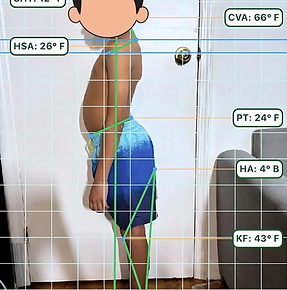
If you've noticed your child W-sitting frequently and you're seeing some of the signs I described, getting expert eyes on your child's specific situation is a smart move. My personal diagnostic assessment gives you a detailed evaluation of your child's posture, movement patterns, and any areas that need attention, along with a clear action plan tailored to their needs.
Every child's body is different, and a one-size-fits-all approach rarely works. A personalized assessment takes the guesswork out of the equation and gives you the confidence to take the right steps for your child.




Comments